LED volume or green screen: what really costs less
Green screen wins the quote. It stops winning the moment post-production starts. Here is where the line actually falls, in the terms a producer has to defend to a client.
The quote for a green-screen day is almost always lower. A cyc wall, a lighting package, a crew — the number lands where the client expects it to land, and everybody signs. The trouble arrives three weeks later, in post, when the invoice for keying, roto, tracking, and comping turns up and nobody budgeted for the third revision round.
An LED volume moves that money. You pay more per shooting hour and much less afterwards, because the background is finished before the camera rolls. Whether that trade favours you depends on four things, and none of them is the day rate.
Where the money actually moves
Green screen defers cost into post. LED volume front-loads it into the shoot. Same job, different shape:
| Cost | Green screen | LED volume |
|---|---|---|
| Stage hour | Lower | Higher |
| Background prep | After the shoot | Before the shoot |
| Keying and roto | Per shot, per revision | None |
| Lighting the subject | Matched in grade | Lit by the wall itself |
| Client sign-off | Weeks after wrap | On the monitor, on the day |
That last row is the one producers underrate. On a green-screen job the client approves a person standing in front of nothing and trusts you about the rest. On a volume they approve the actual frame. Revisions collapse because there is nothing left to imagine.
Green screen sells you a cheaper day. A volume sells you a finished frame.
Four questions that decide it
1. How many background setups?
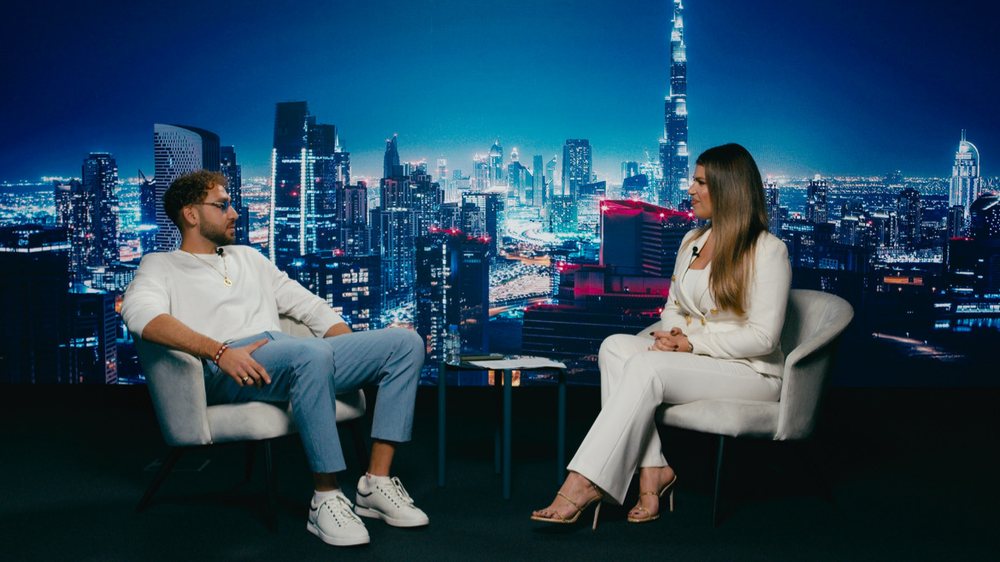
One background across a whole shoot day favours green screen — you key once and reuse the setup. Six worlds in one day favours the volume, because changing the world is a cue, not a re-light. Our talk-show clients run three or four skyline environments in a single session; on green screen each of those is a separate comp pipeline.
2. Is there reflective or translucent material in frame?
Glass, water, chrome, hair, smoke, sequins, spectacles. Every one of these is a roto problem on green screen and a non-problem on a volume, because the environment is genuinely reflecting in them. If your product is a bottle or a watch, this question answers the whole brief on its own.
3. Who has to approve it, and when?
If the approver is in the room, the volume pays for itself in decisions made rather than deferred. If approval happens weeks later by email, the advantage shrinks.
4. How fast does the content have to ship?
A keyed sequence cannot be delivered the same day. An in-camera frame can. For social-first work, where the value of a cut decays in days, this is usually the deciding factor rather than a nice-to-have.
When green screen is still the right answer
It is not close to obsolete, and pretending otherwise is how people end up disappointed. Green screen is still correct when the background does not exist yet and will be built in CG at high resolution; when the camera has to make extreme moves the wall cannot track; when the subject needs to be composited into plates shot elsewhere; and when the whole job is one setup with a generous post schedule and a modest shooting budget.
The honest version of the comparison is not that one beats the other. It is that they bill differently, and choosing badly means paying twice.
What this looks like in Dubai
Our stage in Dubai Media City runs 90+ m² with a 4K LED wall and a mirror floor, rigged with lighting and sound. Studio hire with your own crew runs from AED 2,750 for a half day, with a one-time trial hour for AED 500; with our crew shooting, it starts at AED 800 per hour. Same-day delivery is available on selected packages — which is only possible because there is no keying stage between the shoot and the edit.
If you are weighing a specific brief, the fastest route to an answer is to send the shot list. The number of background setups and the material in frame will usually settle it in one reading.
Send us the shot list.
We will tell you which of the two your brief actually needs — including when the answer is green screen and not us.
Book the studio