LinkedIn video for founders, filmed in a day
A laptop-webcam clip and a studio-shot one cost you the same thing: your time. They do not get the same result. Here is what actually separates them, and how to turn one afternoon into a month of posts.
Most founders who try video on LinkedIn do it the same way: laptop open, ring light from a marketplace order, one take, post, never again. The clip usually looks like what it is — recorded once, under pressure, between two meetings. It is not a lighting problem or a camera problem. It is a batching problem wearing a production complaint.
The founders whose video actually holds attention in the feed are not shooting better single clips. They are shooting four to eight of them in one sitting, a few weeks apart, so no single post has to be perfect and none of them has to happen the morning it goes out.
What the webcam actually costs you
Not money — the studio day costs more than the webcam did. What the webcam costs is everything downstream of the first three seconds, which is the only part of a LinkedIn video most people ever watch before deciding whether to keep scrolling.
| Webcam, at the desk | Studio, batched | |
|---|---|---|
| Audio | Room echo, laptop mic | Clean, close-mic'd |
| Framing | Whatever the laptop lid allows | Set deliberately, every time |
| Background | Bookshelf or blur | Consistent, on-brand, every post |
| Retakes | Rare — you're already late for the next call | Free — you're already in the chair |
| Posting cadence | Whenever there's time to film | Scheduled from one afternoon |
That last row is the real cost. A founder who can only post when there is time to film ends up posting in bursts and silences — which reads, to the algorithm and to the audience, as inconsistency. A founder with four weeks of video already in the drive posts on schedule regardless of how the week is going.
The webcam clip isn't worse because of the lens. It's worse because it's the only one you have.
What actually holds up in the feed
Vertical or square, uploaded natively
LinkedIn's own player is built for a vertical or square frame, and a video uploaded directly to the post autoplays in it. A landscape clip gets letterboxed and starts smaller on the screen it was actually meant for — a phone, scrolling one-handed. Shoot for the format the audience is holding, not the format a webcam happens to produce.
Sixty to ninety seconds, one idea
A talking-head post that tries to cover three points loses the viewer at the transition between the first and second. One point, stated in the first sentence, defended for a minute, works better than a well-organised three-point outline that nobody finishes.
Subtitles, always
A large share of LinkedIn video plays with the sound off by default until someone taps in. A clip that only makes sense with audio loses that entire audience in the first second. Burned-in captions are not optional polish — they are the difference between a video that gets watched muted and one that gets scrolled past.
Batch a month in one session
The studio day works the same way a photo shoot does: you are not filming one thing, you are filming a list. Before you book the room, write down every question you have been asked in the last month that you answered the same way twice — those are your topics, not brainstormed ones. Six to eight of them, sixty to ninety seconds each, is a realistic day.
Wardrobe changes and a couple of background variants inside the same session keep the batch from looking like it was obviously shot in one sitting — the point is a month of posts that feel current, not a visibly single day stretched across four weeks.
When the webcam is still the right call
A same-day reaction to something happening in your industry right now does not wait for a studio slot — that immediacy is the entire value of the post, and a perfectly lit version filmed three weeks later misses the point. The studio batch is for the evergreen half of a content calendar: the explainer, the point of view, the introduction to what you do. Time-sensitive commentary stays on the webcam, and that is correct, not a compromise.
What this looks like at PROS.CRTV
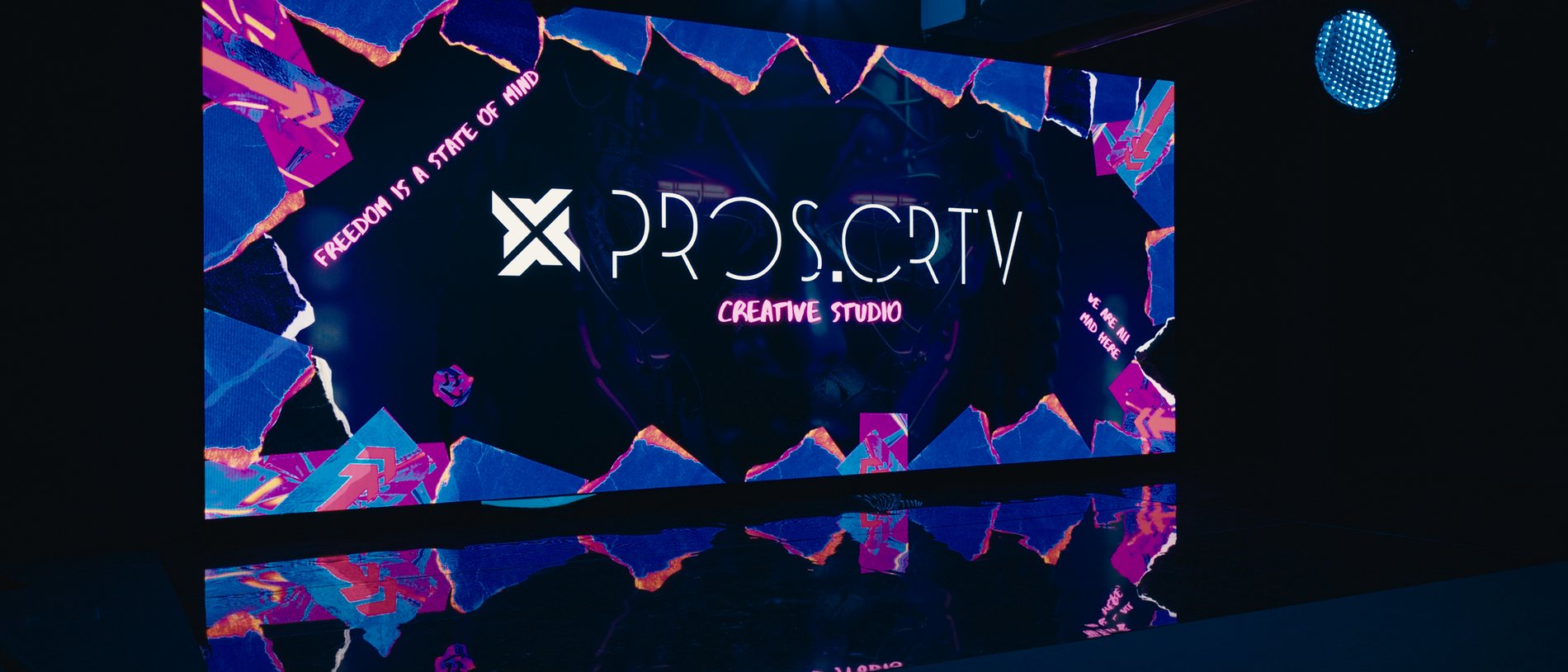
Our stage in Dubai Media City runs 90+ m² with a 4K LED wall, so the backdrop is set once — an office look, a branded environment, a plain gradient — and reused across every topic without re-lighting between takes. Studio hire with your own crew runs from AED 2,750 for a half day, or from AED 800 per hour shot by ours, with same-day delivery available on selected packages.
A typical batch session runs half a day: six to eight pieces, one wardrobe change, edited and capitioned within the week. If you already have a list of questions you keep answering the same way, that list is most of the brief.
Bring your list of six questions.
We will turn one afternoon into a month of posts — set once, shot in a batch, captioned and ready to schedule.
Book the studio