Batch Content Filming for Entrepreneurs That Works
Batch content filming for entrepreneurs turns one focused studio session into weeks of polished Reels, expert clips, and campaign-ready video assets, fast.
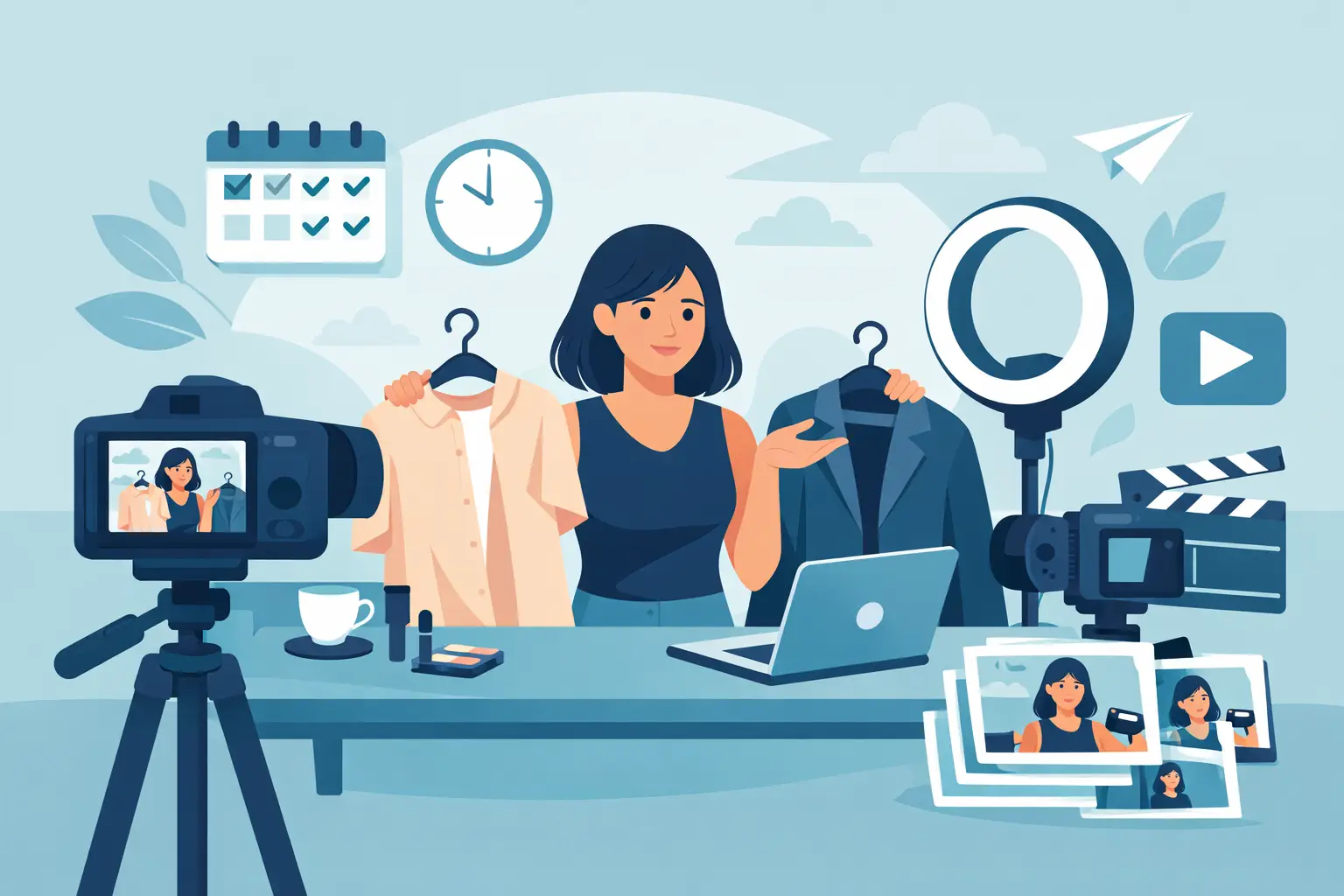
A founder with a strong offer should not lose every Tuesday to deciding what to post. The better move is batch content filming for entrepreneurs: one planned shoot that produces a reliable pipeline of short-form videos, campaign clips, and founder-led assets for the weeks ahead.
This is not about recording 30 random talking-head videos in a row. It is a production system. You arrive with defined topics, repeatable formats, and a clear visual direction. You leave with enough material to stay visible without rebuilding the process every time you need a Reel.
Why batch content filming for entrepreneurs pays off
Content consistency is usually an operations problem, not a motivation problem. Entrepreneurs are balancing sales calls, delivery, hiring, client work, and decisions that cannot wait. When filming is treated as a weekly task, it gets delayed by work with a more immediate deadline.
Batching changes the math. Setup happens once. Hair, wardrobe, lighting, camera framing, sound checks, and visual direction are handled in one block. Your on-camera energy stays focused because you are speaking to related topics in sequence instead of constantly restarting from zero.
A single four-hour session can create a month of usable content when the shoot is designed around short-form output. That may mean 20 to 25+ Reels, depending on the format, speaking pace, number of setup changes, and how much polish each edit requires. A high-concept campaign with multiple scenes will naturally produce fewer final pieces than a direct expert-led series. The goal is not volume for its own sake. It is a usable library of content that supports your business.
There is also a commercial benefit. Repeated filming creates visual consistency. Your audience starts recognizing your face, message, environment, and point of view. That recognition matters when prospects see three seconds of your video between dozens of other posts.
Start with the business result, not the camera
Before booking a studio, decide what the content needs to do. “I need more videos” is not a brief. A better brief is: “I need qualified consultation calls from founders,” “I need to explain our new service,” or “I need my sales team to have video answers to common objections.”
That decision determines what gets filmed. A personal brand selling advisory services may need authority clips, client-problem breakdowns, and direct calls to book a conversation. A product-based business may need demonstrations, founder stories, objections, and campaign hooks. A corporate leader preparing for a launch may need polished announcement videos, presentation excerpts, and short executive commentary.
Choose one primary goal for each filming day. You can capture supporting material, but mixing five unrelated goals into one session usually creates content that looks busy rather than strategic.
Build content pillars people can recognize
Most founders do not need 40 new themes. They need a few repeatable pillars that reflect what the business is known for. For example, a consultant might rotate between common mistakes, practical frameworks, client questions, industry opinions, and behind-the-scenes decisions.
Within each pillar, write specific prompts. “Talk about marketing” is too broad. “Why a strong offer still fails when the sales process is vague” gives the speaker a useful starting point and gives the editor a clear headline.
Prepare 25 to 35 prompts for a four-hour shoot, but do not force yourself to record every one. Some topics will produce two excellent versions. Others will feel flat when spoken aloud. Having more prompts than you need protects the session from creative stalls.
Plan formats before you arrive
The fastest shoots use defined formats. You should know whether each clip is a direct-to-camera Reel, a conversation-style piece, a product demonstration, a green-screen-style explanation, or a presentation segment supported by visuals.
Direct-to-camera clips are efficient because they need limited setup changes. They work well for sharp opinions, answers, and educational points. Presentation clips can add authority when the topic needs data, diagrams, or a strong visual backdrop. Product content may require more time for framing, hands, props, and close-up coverage.
A production-ready LED studio gives you more options without requiring a location change. You can move from a clean branded background to a digital cityscape, presentation visual, or campaign environment while keeping lighting, sound, and camera setup controlled. That flexibility is valuable, but it should serve the message. A different background for every clip can make a content series feel disconnected.
Plan two or three visual setups, not ten. One polished main setup, one alternate angle or background, and one format for slides or product demonstrations is enough for most entrepreneur content days.
Write for speech, not for a document
A full script can help for a launch announcement or a technical message. For most social content, bullet-point beats are more effective. They keep the founder natural and reduce the risk of sounding like they are reading a memo.
A simple structure works: start with the problem or opinion, make one clear point, give an example, and end with the next step. The next step might be a question, a prompt to save the post, or a direct invitation to contact your business. Not every Reel needs a hard sell. But every Reel should have a reason to exist.
Keep each idea narrow. Trying to explain an entire service in 45 seconds creates a rushed clip with no memorable takeaway. One useful answer will usually outperform five half-explained ideas.
Use the shoot day like a production day
The biggest advantage of a professional studio is not only how the final image looks. It is the removal of friction. Proper lighting, sound, camera positions, and a prepared set mean you can spend your time delivering the message rather than troubleshooting a microphone or moving furniture.
Arrive with wardrobe options that work across setups. Solid colors generally perform well on camera, while tight patterns can distract or create visual interference. Bring your product, branded materials, laptop, presentation files, and any props needed for demonstrations. If a screen is part of the plan, test your visuals before filming begins.
Film the most demanding content first. That may be the founder statement, the key campaign message, or the video that requires precise wording. Energy is highest early in the session. Save simple tips, conversational clips, and alternate hooks for later, when you can move quickly.
Do not stop after every imperfect sentence. A clean second take is useful, but excessive repetition can make delivery stiff. Keep momentum. Editors can remove pauses, tighten phrasing, and select the strongest version when the footage is organized properly.
At PROS.CRTV, a 90+ m² Dubai studio with an LED screen, mirror floor, lighting, and sound can support founder content, team recordings, and more visual presentation formats in one controlled environment. For businesses working on a tight content calendar, the practical value is simple: shoot the material in a defined session, then receive ready-to-publish short-form edits within 24 hours.
Editing is where a filming day becomes a content system
Raw footage is not a content strategy. The real outcome is a set of finished assets that can be published without another production bottleneck. Before filming, agree on the edit style: captions, brand colors, logo use, framing, music direction, transitions, and whether each video needs a cover image.
Short-form edits need a strong opening. The first line, first visual, or first on-screen statement should give the viewer a reason to stay. This does not mean every clip needs a dramatic claim. For a B2B audience, specificity is often more effective than hype. “Three signs your proposal is losing buyers before the call” is clearer than “You need to hear this.”
Ask for versions that fit your distribution plan. Vertical video is the priority for Reels, Shorts, and TikTok. Some topics may also deserve a longer landscape cut for LinkedIn, a website page, internal training, or sales outreach. Recording with multiple outputs in mind can increase value, but only if the framing and message are planned accordingly.
Once the edits arrive, organize them by pillar, topic, and call to action. A content folder full of unnamed files creates another delay. A labeled library lets your team publish quickly, repurpose clips for campaigns, and identify which themes generate the strongest response.
Measure what helps the business move
Views are useful, but they are not the only measure. For an entrepreneur, the better questions are whether the content is bringing profile visits, qualified messages, email sign-ups, sales conversations, or stronger conversion from people already considering your offer.
Review performance after several weeks, not after one post. Look for patterns in topics, hooks, video length, and delivery style. If client-question videos consistently bring leads, build the next shoot around more client questions. If polished studio visuals increase watch time but your calls to action are weak, keep the visual standard and improve the closing message.
Batching should make content easier to improve because the process is repeatable. Each session becomes a clearer test of what your market wants to hear from you.
Your next filming day does not need more complexity. It needs a sharper brief, a prepared set, and enough structure to turn four focused hours into content your business can actually use.
Ready to shoot this?
Bring the brief to the stage — LED wall, mirror floor and a crew that turns ideas like this into finished content — same day on selected packages.
Book the studio