How to Choose the Right Video Production Studio
Choose a video production studio that delivers polished footage, a prepared crew environment, and ready-to-publish content on a clear schedule for launch.
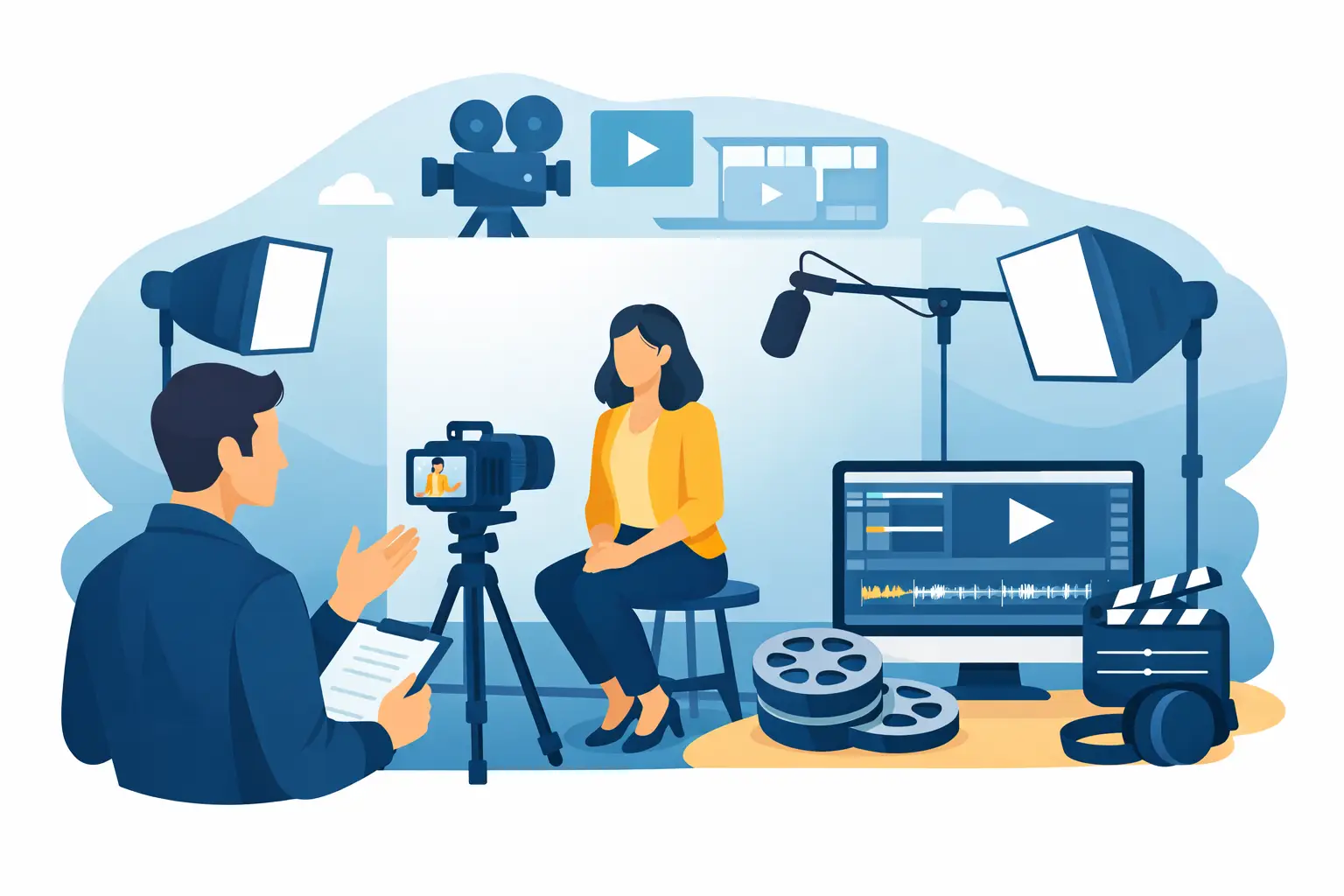
A video production studio should remove friction before the first camera rolls. If you are booking a location for a campaign, a founder-led content day, a corporate presentation, or a client shoot, the real question is not whether the space looks good in photos. It is whether the studio can support the format, crew, schedule, and delivery speed your project requires.
The right choice helps you walk in prepared, shoot without unnecessary resets, and leave with a defined path to usable content. The wrong choice creates workarounds: missing power, limited camera angles, unreliable sound, a crew squeezed into a corner, or editing that starts days later than planned.
Start With the Output You Need
A studio is a production tool, not simply a room with lights. Begin by defining what must be ready after the shoot. A one-day brand campaign, a month of short-form social content, a keynote recording, and a virtual-production commercial all need different setups.
For social media, volume and pace usually matter most. You may need vertical framing, several visual looks, quick talent changes, clean audio, and a workflow that turns a four-hour shoot into 25 or more usable Reels. In that case, booking a beautiful but empty room can be a false economy. You still need to organize lights, backgrounds, audio, crew, data management, and post-production.
For a corporate team or speaker, consistency matters more than constant visual change. The studio should provide controlled lighting, reliable sound, a screen or presentation background, and enough space for the presenter to move naturally. Ask how presentation files are handled, whether the screen can display branded visuals, and what short-form edits are included after recording.
For agencies, production companies, and independent crews, the requirements are often more technical. You may bring your own director, cinematographer, cameras, and production plan, but still need a facility that is ready for professional work. Confirm the usable floor area, ceiling clearance, power access, loading process, sound conditions, and maximum crew capacity before you quote the job to your client.
What a Production-Ready Studio Actually Includes
“Fully equipped” can mean almost anything. A serious video production studio should be specific about what is available and what your team still needs to bring.
Start with the shooting environment. Large-format LED screens can create polished visual depth without building multiple physical sets. They are particularly useful for branded backgrounds, product visuals, presentation graphics, stylized environments, and virtual-production scenes. A mirror floor can add scale and reflections, but it is not right for every format. It works best when the creative direction accounts for it through wardrobe, camera placement, and lighting design.
Lighting and sound should be treated as essentials, not upgrades. Good lighting creates consistency across takes and reduces correction time in post. A prepared sound setup protects interviews, presentations, and direct-to-camera content from the hollow, distracting audio that often makes otherwise strong footage unusable.
Space affects more than comfort. A studio that can hold a crew of up to 20 people gives a producer room for camera, lighting, sound, client monitoring, styling, and talent movement. That capacity is valuable for a commercial or a multi-camera production. For a single creator filming a talking-head series, a larger space may still be useful, but only if the package uses it efficiently rather than adding unnecessary production cost.
In Dubai, PROS.CRTV provides more than 90 square meters of shooting space with an LED screen, mirror floor, lighting, sound, and room for crews of up to 20. That combination matters when a shoot needs to move from concept to multiple finished formats without changing locations.
Choose Between Studio Rental and Turnkey Production
The best booking model depends on who is leading the production.
Studio rental makes sense when you already have a crew, equipment plan, and clear shot list. Production companies, videographers, photographers, and agencies often prefer this route because it lets them retain creative control while working in a prepared environment. Hourly rental can also be practical for a focused shoot, test session, or client presentation. Starting rates are useful, but the final decision should account for setup time, reset time, and whether the studio charges separately for equipment, technicians, or cleaning.
Turnkey production is better when content is the priority and managing a crew is not. A business owner should not need to coordinate a videographer, sound recordist, editor, studio manager, and social-media strategist just to produce a month of content. A defined package brings those pieces into one workflow: planning, shooting, recording, editing, and short-form deliverables.
There is a trade-off. Rental gives experienced teams flexibility, while turnkey packages give clients predictability. If you need a highly customized commercial with a large crew and a detailed production design, rental plus your own specialists may be the stronger option. If you need high-quality content published fast, a package with a set number of recordings and edits is usually more efficient.
Ask About Turnaround Before You Book
Fast delivery is not a vague promise. It should be tied to a clear deliverable. Ask what will be delivered, in which aspect ratios, how many revisions are included, and when the first files will be ready.
For social content, same-day or next-day speed can change the value of the shoot. A timely product launch, event recap, expert commentary, or founder announcement loses momentum if the footage sits in a post-production queue for two weeks. Ready-to-publish Reels within 24 hours give marketing teams a practical advantage: they can shoot, review, schedule, and respond while the topic is still relevant.
That does not mean every project should be rushed. Commercial films, color-intensive brand pieces, motion graphics, and multi-language edits need more post-production time. The key is matching the timeline to the format. A studio partner should be able to tell you exactly which content can move fast and which content deserves a longer editorial process.
Plan the Shoot Day Around Real Production Time
A four-hour booking is not four hours of final footage. It includes arrival, setup, lighting adjustments, sound checks, wardrobe changes, screen changes, retakes, and file management. Strong production planning protects the time you are paying for.
Prepare your talking points before arrival, but do not script every sentence so tightly that the delivery becomes flat. For a founder or speaker, a structured outline with key messages, examples, and calls to action usually produces more natural clips. For a team, decide in advance who is on camera, who approves takes, and who has final authority on brand messaging.
If you are using an LED background, provide visual assets in the correct format before the shoot. This prevents last-minute resizing or substitutions. If the production includes multiple videos, group them by lighting setup and camera position. Film all direct-to-camera segments together, then move to interviews, product demonstrations, or presentation segments. Small decisions like this can save an hour of resets.
It is also worth defining the content hierarchy. Which three videos must be perfect? Which clips are designed for volume? What can be captured as supporting material while the main setup is already live? This prevents the team from spending the entire session polishing one take while losing the opportunity to create a useful content library.
Evaluate the Studio Like a Production Partner
The final decision should be based on operational confidence. You need to know who is responsible for setup, what happens if the schedule runs late, whether technical support is available, and how footage moves from camera to edit.
A good studio asks practical questions before the shoot: How many people are coming? What are you filming? Which platforms will use the content? Do you need horizontal, vertical, or both? Are you bringing your own crew? These questions are not bureaucracy. They are how a studio protects the production day.
Look for clear pricing and defined formats rather than broad promises. An hourly rate is useful when you know your requirements. A package is useful when you need a fixed result, such as recorded presentations plus short edits, or a social-media shoot with a predictable number of deliverables. The clearer the scope, the easier it is to manage expectations on both sides.
The strongest studio choice is the one that makes your next action obvious: arrive with a plan, use prepared equipment, capture what matters, and receive content your team can publish. When the location, technical setup, and post-production workflow are aligned, a shoot stops being a complicated event and becomes a repeatable part of your marketing operation.
Ready to shoot this?
Bring the brief to the stage — LED wall, mirror floor and a crew that turns ideas like this into finished content — same day on selected packages.
Book the studio