Dubai Film Studio Rental Guide for Faster Shoots
Use this Dubai film studio rental guide to compare space, LED walls, crew access, sound, lighting, pricing, and turnaround before booking for your shoot.
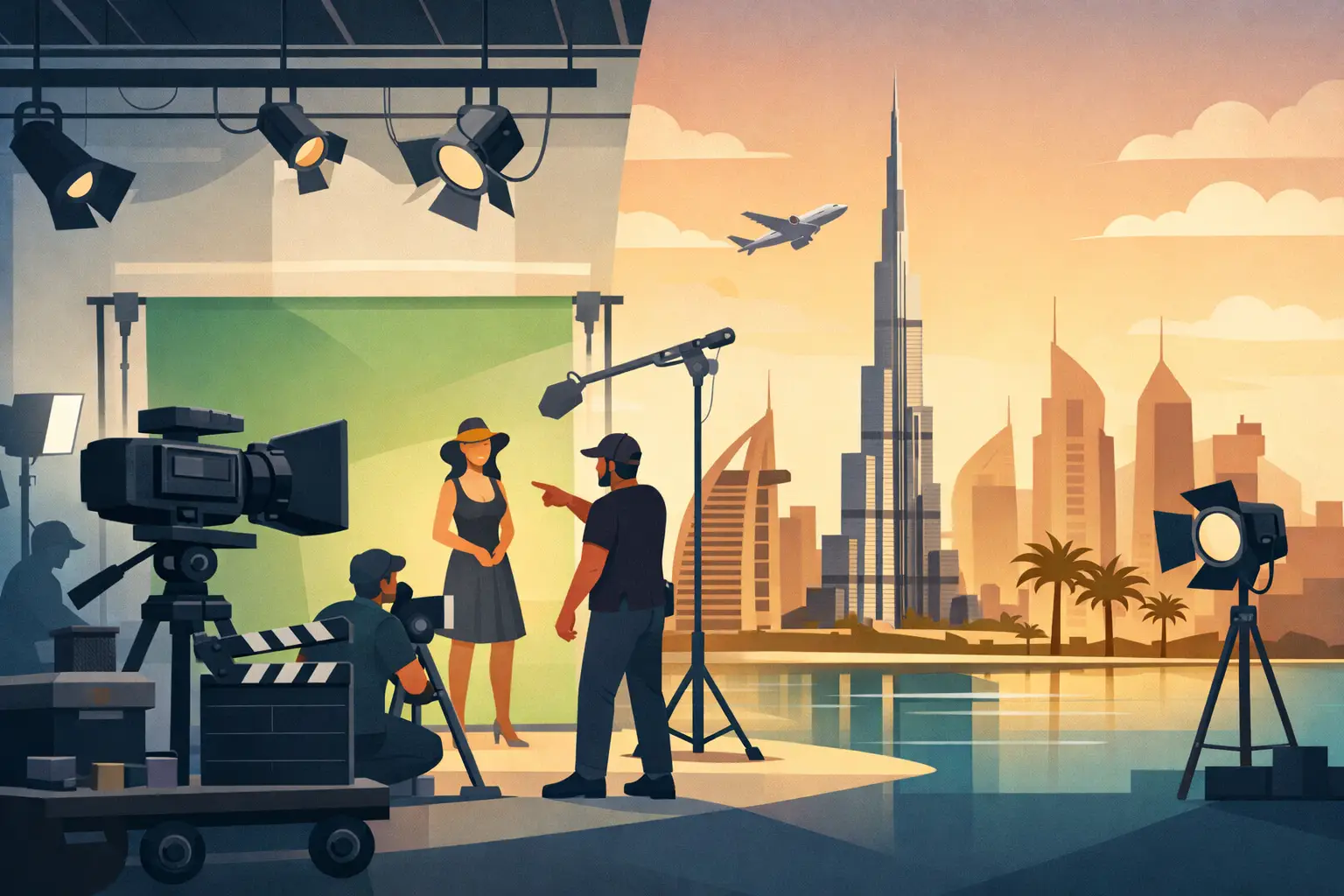
A studio can look impressive in a photo and still cost your crew hours on shoot day. The real test is whether you can walk in, power up, frame the first shot, and keep moving. This Dubai film studio rental guide is built for that decision: choosing a space that protects your schedule, supports the format, and produces footage that is ready to use.
For a commercial production company, that may mean controlled light, proper crew circulation, and enough power for your own kit. For a founder or marketing team, it may mean one focused session that becomes a month of social content. The right rental is not simply a room with a backdrop. It is a production environment with a clear operating plan.
Start With the Shoot Format, Not the Studio Look
Before comparing studios, define what the camera needs to capture. A talking-head series, product campaign, podcast, training module, fashion test, and virtual-production commercial all place different demands on the room.
A presenter-led shoot needs clean sound, a flattering lighting setup, enough distance between subject and background, and a monitor or LED screen that supports the message without creating reflections. A product shoot may need tabletop control, flexible grip positions, blackout capability, and time for multiple lighting changes. For social media production, the priority is often volume: several repeatable setups, quick wardrobe changes, vertical framing, and an editing plan that turns one booking into a useful content library.
Ask your producer or client to approve the deliverables before you book. Be specific about aspect ratios, the number of final videos, whether the screen needs custom visuals, and whether audio will be recorded live. A studio that is ideal for a single polished interview may not be the best choice for 30 fast vertical clips.
Dubai Film Studio Rental Guide: Check the Working Space
Square footage is a starting point, not the full answer. Look at usable shooting depth, ceiling height, lighting positions, access routes, and where the crew will stand once camera, talent, client, and equipment are in the room.
A 90+ m² studio gives a small professional crew meaningful room to work, especially when the layout is planned around a primary set. Still, capacity matters. If a studio is designed for crews of up to 20, confirm whether that includes talent, agency representatives, hair and makeup, and client-side decision-makers. An overloaded set slows approvals and makes sound control harder.
Request a current floor plan or arrange a site visit for complex shoots. Check the load-in route, parking or delivery access, elevator requirements, restroom proximity, changing space, and holding area. These details feel minor during pre-production and become expensive when a product case, flight case, or large prop cannot reach the set efficiently.
For any camera move, mark the distance you need. Wide frames, long-lens portraits, dolly movement, and full-body shots require more room than a studio tour video suggests. If you are shooting against an LED screen, leave enough separation between the talent and the wall to reduce unwanted spill and reflections.
Decide Whether an LED Screen Adds Real Value
An LED screen can create a premium visual without building several physical sets. It is useful for branded environments, city scenes, motion graphics, product worlds, keynote-style presentations, and visual transitions that make short-form content feel less repetitive.
But virtual production is not a default upgrade for every shoot. It works best when the content benefits from controlled backgrounds or when your creative concept requires motion and scale. A simple expert interview can be stronger against a well-lit, minimal set if the screen content would distract from the speaker.
When comparing LED-equipped studios, clarify these points before the booking:
- What are the screen dimensions, pixel pitch, and recommended camera distance?
- Is the screen included in the hourly rate, and is a technician included?
- Who prepares and loads the visual assets?
- Can the screen display your preferred resolution and frame rate?
- How will mirror flooring, glass products, or glossy wardrobe affect reflections?
A mirror floor can make the frame feel larger and more cinematic, but it needs deliberate lighting and camera placement. It can reflect stands, crew members, and background edges. Treat it as a creative asset that requires planning, not as a passive feature.
Confirm What Is Ready When You Arrive
“Equipped studio” can mean anything from a few basic stands to a fully prepared set. Get the equipment list in writing and separate included tools from items that require an add-on, an operator, or outside rental.
For most productions, verify lighting fixtures, modifiers, C-stands, grip, power distribution, sound treatment, microphones, monitoring, teleprompter availability, and internet access. If you are bringing your own cinema package, ask about power capacity, blackout control, rigging rules, and any restrictions on haze, large builds, or wall mounting.
Sound deserves extra attention. A visually strong studio is not automatically a quiet recording environment. Listen for air conditioning, nearby traffic, echo, lift noise, and activity from adjacent units. If you are filming speeches, courses, interviews, or podcasts, capture a short test recording during the location check. Fixing noisy dialogue in post takes time and often reduces quality.
A production-ready facility should also have a clear handoff process. Know who opens the studio, who can adjust lights or screen content, how overtime is calculated, and when the space must be cleared. Defined rules let your crew focus on the shot instead of negotiating logistics during the booking.
Budget for the Full Production Day
The advertised hourly rate is only one part of the cost. A Dubai studio rental starting at 500 AED per hour can be efficient for a focused shoot, but the total depends on preparation, production complexity, crew, set changes, post-production, and how much content you expect to leave with.
Compare quotes based on usable production time. A four-hour booking may be enough for an experienced team with a locked shot list and one primary setup. It may be too short if you need a custom LED playlist, multiple speakers, makeup, product styling, or several lighting looks.
Build your schedule around these blocks: load-in and setup, technical testing, talent preparation, shooting, client review, reset time, and load-out. A tight schedule is good. A schedule that assumes every take is perfect is not.
For business clients, a turnkey package can be more cost-effective than hiring the room, videographer, sound recordist, editor, and social media editor separately. The trade-off is creative control. If your agency has a defined crew and camera workflow, studio-only rental may be the better fit. If your goal is finished short-form assets fast, one integrated team reduces handoffs and post-production delay.
Plan the Content Pipeline Before Camera Rolls
The fastest shoots are decided before talent arrives. Write the message order, identify the strongest opening line for each video, set a target duration, and decide which moments need horizontal and vertical versions. For a founder or speaker, filming one long presentation without a repurposing plan usually creates more footage than useful content.
Instead, group content into clear formats: authority clips, answers to common customer questions, product explanations, event invitations, client stories, and direct calls to action. Keep each setup consistent long enough to capture several pieces, then change angle, lighting, screen visual, or wardrobe to create variety.
If same-day or next-day delivery matters, agree on the edit style before the shoot. Define captions, brand colors, music approach, framing, cover images, and approval process. PROS.CRTV, for example, combines a prepared Dubai studio environment with in-house production and ready-to-publish Reels delivered within 24 hours for defined formats. That model is especially practical when your team needs content output, not just raw footage.
Questions to Ask Before You Confirm
Ask for a written confirmation of the booking hours, included equipment, staffing, rates for overtime, insurance requirements, and cancellation terms. Confirm who is responsible for LED assets, backups, data transfer, and final cleanup. If your project includes a client, ask whether they can review footage on a monitor during the session.
Also ask what happens if a technical issue affects the shoot. Professional studios have procedures for equipment problems, but the useful question is how quickly the team can respond and what alternatives are available. A backup lighting option or clear technical support can save a high-value session.
Finally, share your shot list with the studio before arrival. Even a one-page plan helps the team prepare the right layout and flag potential issues early.
The best studio booking creates momentum: your crew knows where to stand, your talent knows what to say, and every hour produces footage with a defined job after the shoot. Book the space that makes that pace possible, then arrive ready to press record.
Ready to shoot this?
Bring the brief to the stage — LED wall, mirror floor and a crew that turns ideas like this into finished content — same day on selected packages.
Book the studio