LED Screen Studio for Filming That Works
Choose an LED screen studio for filming with the space, lighting, sound, and fast workflow needed to turn one shoot into polished, ready-to-publish content.
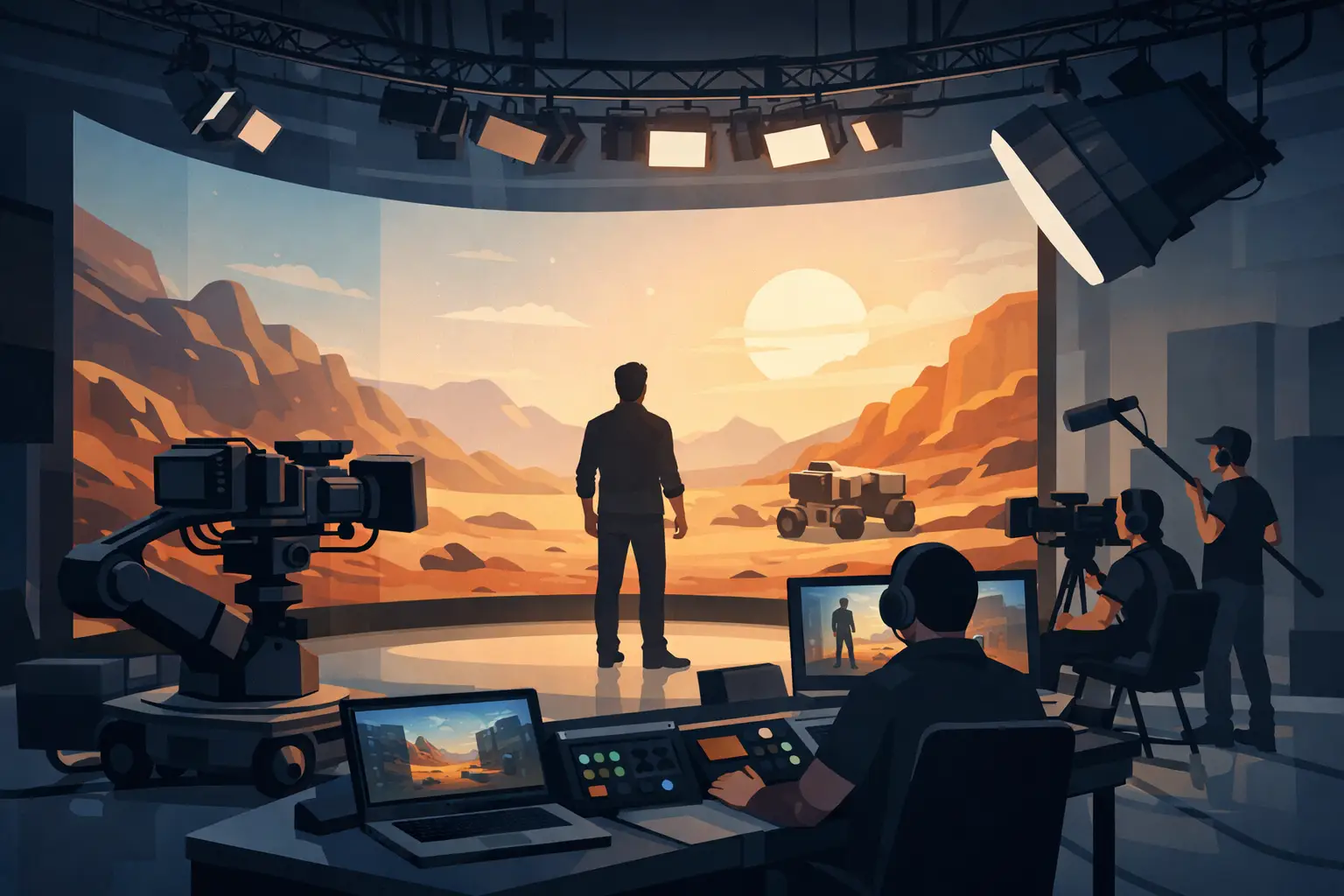
A location shoot can lose half a day to travel, permits, weather, resets, and a background that looks good only from one angle. An LED screen studio for filming gives your production a controlled alternative: the environment, light, sound, and visual background are all handled in one place. The result is not simply a more impressive frame. It is a faster, more predictable production day.
For a brand shoot, a campaign, a founder video, or a commercial sequence, the right studio lets the team spend its time on performance and footage rather than logistics. But an LED wall alone does not make a studio production-ready. Screen quality, room depth, lighting control, crew workflow, and post-production planning all affect what you can deliver when the day is over.
What an LED Screen Studio for Filming Should Solve
The practical value of an LED setup is control. Instead of placing talent in front of a flat green background and building every environment later, you can display an approved visual world behind them during the shoot. That might be a branded presentation, a cityscape, a moving product animation, an abstract color field, or a custom campaign environment.
This changes the experience on set. Talent can react to the background. The camera team can see the full composition immediately. Clients can approve the direction in real time. For talking-head content, the screen can carry product visuals, data points, or a presentation deck without forcing the speaker to stand beside a small monitor.
It also reduces the number of vendors and locations a project may need. That matters when the brief is straightforward: record a polished message, produce a collection of social clips, or capture a product-led campaign with consistent visual standards. One studio day can replace a sequence of office setups, rented locations, and separate edit sessions.
The trade-off is that LED is not the right answer for every scene. A wide action sequence may require more floor area and tracking capability than a compact studio provides. A scene involving natural sunlight, heavy practical effects, or a highly specific physical location may still be better on location or on a built set. The strongest choice starts with the shot list, not the technology label.
Start With the Format You Need to Produce
Before booking, define the final output. This is the fastest way to select a studio that fits the job rather than paying for production features you will not use.
A personal brand or executive content day needs a different setup from a commercial film crew. For short-form content, priorities are usually a strong screen background, clean key lighting, reliable sound, room for several visual setups, and an efficient edit plan. A four-hour session can capture enough material for weeks of Reels when topics, wardrobe changes, and formats are planned before call time.
For a corporate presentation, the LED wall can function as a large visual support system. Slides, motion graphics, branded loops, and product screens can sit behind the presenter, creating a more premium result than a standard conference-room recording. Confirm whether the screen content will be displayed in its native format, and build presentations with the final camera framing in mind. Small text and dense slides rarely work well on camera.
For production companies and agencies, the key question is operational flexibility. Can your crew bring its own camera package? Is there enough clearance for lenses, lighting stands, monitors, and a working video village? Can the room support the number of people required for the shoot without slowing down resets? A studio should make your process easier, not force your crew into a compromised version of it.
Check the Room, Not Just the Wall
A large LED wall looks compelling in studio photos, but the surrounding space determines whether it works for your camera plan. Ask for the usable studio area, screen dimensions, ceiling height, and the distance available between camera and screen. These measurements affect lens choice, framing, depth, and how easily you can avoid unwanted reflections.
At PROS.CRTV, the 90+ m² Dubai facility is designed as a working production environment, with a large-format LED screen, mirror floor, lighting, sound, and capacity for crews of up to 20 people. That combination is particularly useful when the project needs more than a single locked-off interview setup. You can move between social content, presentation recording, commercial-style shots, and stills without moving the entire production to another location.
The mirror floor deserves planning. It can add scale, polish, and useful reflections to the final image, especially for fashion, product, and performance-led work. It can also reveal cables, stands, footwear, and poorly positioned lights. Treat the floor as part of the frame from the first lighting test, not as a detail to fix later.
Sound is equally practical. A visually advanced space is not automatically a quiet recording environment. If dialogue is the priority, ask about ambient noise, microphone options, air conditioning, and whether the space can support clean audio while crew members work nearby. Recording a strong voice track on set saves time and protects the edit.
Screen Content Needs Production Planning
The LED wall does not need to display a realistic landscape to be effective. Often, the strongest content is simple: brand colors, a graphic gradient, a high-resolution still, a product interface, or subtle movement that supports the subject rather than competing with them.
Prepare the screen assets before the shoot. Confirm pixel dimensions, aspect ratio, frame rate, playback method, and whether animations have been tested on the actual wall. A file that looks sharp on a laptop may show moiré, banding, excessive brightness, or unexpected color behavior once filmed.
Camera settings matter here. Your cinematographer should test shutter speed, frame rate, white balance, exposure, and focus against the screen before talent arrives. LED panels refresh at a rate that may interact with camera settings, creating rolling bands or flicker if the setup is wrong. This is not a reason to avoid LED production. It is a reason to book a studio with an experienced technical workflow and allow time for testing.
Keep wardrobe in the plan as well. Fine stripes, tight patterns, highly reflective fabrics, and colors close to the background can create distracting results. A quick camera test with the selected wardrobe is more reliable than making assumptions from a mood board.
Build a Day Around Deliverables
The most expensive studio time is unplanned studio time. A good production schedule begins with the files you need to publish, not a vague goal of capturing content.
For a social content package, decide how many short videos you want, which topics need direct-to-camera delivery, and which clips need B-roll or product cutaways. Group videos by lighting setup and wardrobe, then sequence them so the team can record multiple variations without rebuilding the set every 20 minutes. A founder may record a campaign message, educational clips, sales answers, and testimonials in one setup, then switch background and wardrobe for a second visual chapter.
For a corporate team, identify which sections require the full presentation screen and which can be captured as clean portrait or landscape clips. For a commercial production, lock the visual references, screen loops, prop list, cast schedule, and camera movement before the studio day. The more decisions that happen before the crew enters the room, the more usable footage leaves with them.
Fast delivery requires the same discipline. If the goal is ready-to-publish Reels within 24 hours, editing should be planned during pre-production. Agree on aspect ratios, caption style, brand graphics, clip length, music approach, and approval contact in advance. Otherwise, a fast shoot can become a slow review cycle.
Questions Worth Asking Before You Book
A studio booking should come with clear answers, not assumptions. Confirm the hourly rate, minimum booking period, what equipment is included, and what your crew is expected to bring. Ask how screen content is loaded, whether a technician is available, and how much time is needed for setup and testing.
Also establish the workflow around the people in the room. Can clients attend? Is there space for makeup, wardrobe, equipment cases, and a production team? What are the access, parking, loading, and overtime arrangements? These details sound administrative, but they directly affect whether the first shot starts on time.
Finally, be direct about delivery. If you need raw footage only, define the handoff method. If you need edited assets, specify the number of final videos, revisions, formats, and deadline. A production-ready studio should make this conversation simple because the output is part of the service, not an afterthought.
The best LED studio shoot feels controlled without feeling restrictive. Bring a clear brief, screen assets that have been prepared for camera, and a deliverable-first schedule. Then use the room for what it is built to do: turn one focused production day into content your audience can actually see, understand, and act on.
Ready to shoot this?
Bring the brief to the stage — LED wall, mirror floor and a crew that turns ideas like this into finished content — same day on selected packages.
Book the studio