LED Wall Versus Green Screen for Your Shoot
LED wall versus green screen: compare cost, speed, realism, and flexibility to choose the right virtual production setup for your next shoot for any team.
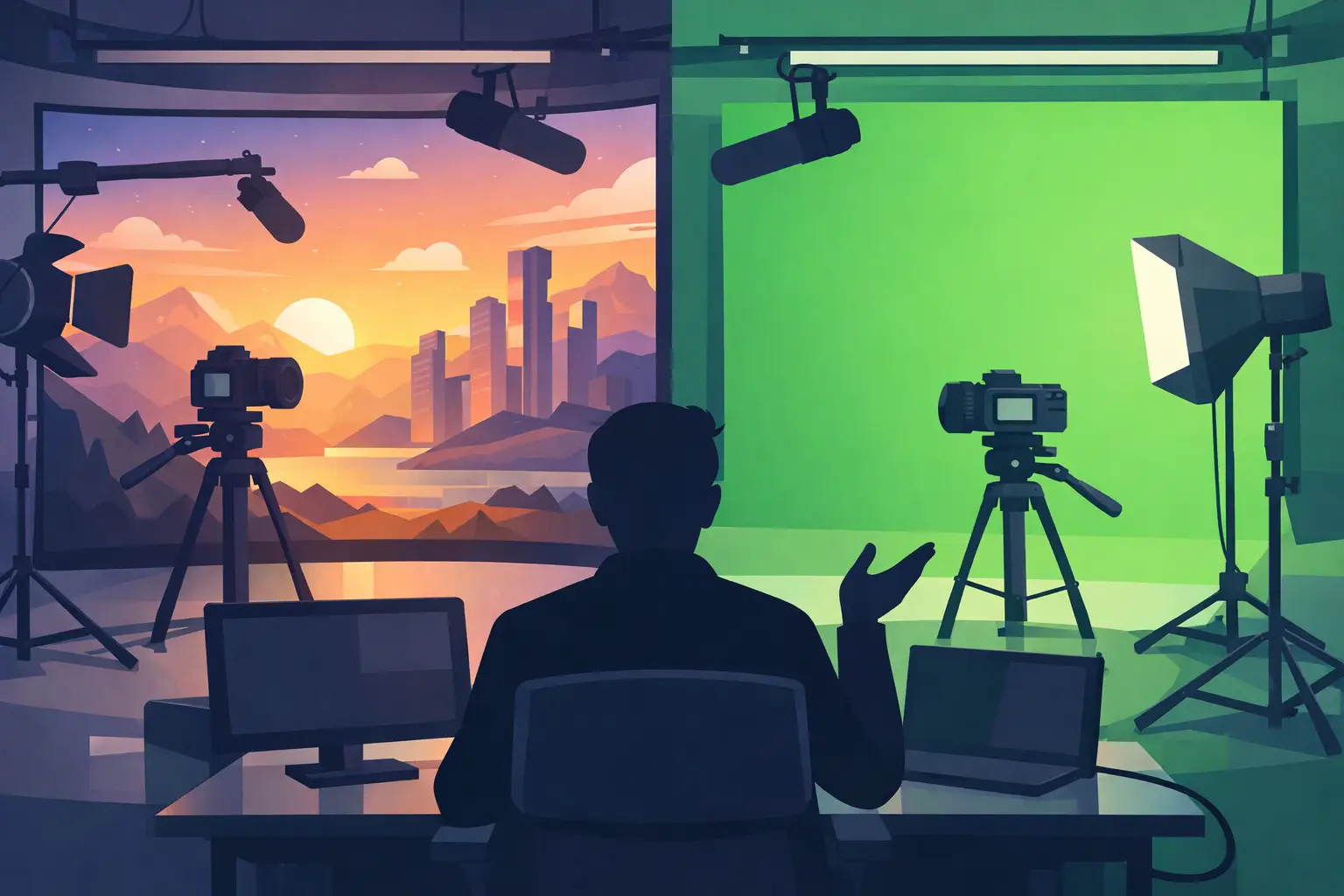
A client wants a Dubai skyline at sunset behind a founder. A green screen can create it later. An LED wall can put that skyline in the room, reflected in the subject’s eyes and on the floor, while the team sees the final frame on camera. That is the practical difference in the LED wall versus green screen decision: are you optimizing for maximum post-production freedom, or for a faster, more visible final result on shoot day?
Neither option is automatically better. The right choice depends on the format, the talent, the number of deliverables, the visual complexity, and who is responsible for post. For content teams working to a release schedule, the technology has to serve the workflow, not become another production problem.
What an LED wall changes on set
An LED wall displays the background live behind the subject. Instead of filming against a solid color and replacing it afterward, the camera captures much of the environment in real time. A presentation can play behind a speaker, a branded motion graphic can fill the frame, or a cinematic environment can establish a location without moving the crew.
The most immediate advantage is decision-making. The director, client, and talent can see the composition during the take. Framing, wardrobe, lighting, background color, and on-screen graphics are easier to judge before the team wraps. That cuts down on the familiar post-production surprise: a key looks clean, but the final background makes the shot feel flat or disconnected.
LED also produces natural interactive light. A warm sunset visual can add warm tones to skin, while a city-at-night plate can create the cooler reflections expected from that setting. With a mirror floor, the environment can continue below the talent and add depth that is harder to build convincingly after the fact.
For presenters, founders, and first-time on-camera talent, this is often a performance advantage. Speaking to a real visual feels more natural than standing in front of an empty green surface and imagining the finished scene. The result is usually faster takes and more confident delivery.
Where LED walls require preparation
Real-time does not mean zero planning. Screen content must be designed at the right resolution and format, and the background needs to work with the camera angle, lens, and movement. Fine patterns, tight stripes, and certain fabrics can create moiré. A poor-quality background file will still look poor on a large display.
Camera settings matter too. Shutter speed, refresh rate, exposure, and white balance need to be tested before recording. If the project involves a moving camera and a perspective-correct virtual environment, it may also require camera tracking and a more specialized virtual-production workflow.
An LED wall is at its strongest when the environment is part of the shot, not simply a replacement for every possible location. A well-prepared visual, proper lighting, and a clear shot plan make the setup look premium. Treating it as a last-minute digital wallpaper does not.
What green screen still does better
Green screen remains one of the most flexible tools in production. It gives the post-production team the ability to replace the background, rebuild a location, change the time of day, and create multiple visual versions from the same footage. For a campaign that needs dozens of localized settings or product variations, that flexibility can be valuable.
It is also useful when the final environment has not been approved yet. You can shoot talent first and make background decisions later. For VFX-heavy work, full-body compositing, action sequences, or scenes where the digital world must change dramatically after filming, green screen may be the more practical route.
The trade-off is that green screen moves risk downstream. The background is not visible in the final form while filming, so everyone must rely on planning, reference images, and experienced direction. The keying process adds time, especially around hair, translucent materials, motion blur, or reflective objects. Green spill can contaminate skin, edges, and wardrobe, creating more cleanup in post.
A green screen also asks more from talent. A speaker may need to point at charts that are not there yet, react to an imagined location, or maintain precise eyelines without visual cues. An experienced presenter can handle that easily. For a business owner recording a month of short-form content in one session, it can slow the day down.
LED wall versus green screen: compare the real costs
The budget conversation should not stop at studio rental. Compare the complete production path: prep, shooting time, post-production, revisions, and time to publish.
Green screen can be less expensive at the capture stage, particularly if you already have a backdrop, lighting, and an editor who handles keying efficiently. But a lower shoot-day cost can grow quickly when every clip needs compositing, background placement, edge cleanup, color matching, and client revisions.
An LED wall can require a higher upfront studio investment because the display, playback, lighting, and production-ready environment are already part of the setup. In return, it can reduce compositing work and make approvals faster because the visual direction is established on set. For social content, corporate presentations, and branded talking-head videos, that speed often has direct commercial value.
The cost question becomes simple: do you need to buy flexibility after the shoot, or do you need to buy certainty during the shoot?
If your team needs polished Reels quickly, a real-time environment can shorten the route from camera card to published content. If you need a fully changeable campaign world across markets and languages, green screen may justify the additional post budget.
Choose by production format, not by trend
For social-media batches, LED is usually the more efficient option when the goal is volume with a premium visual finish. A founder can record multiple hooks, topics, and calls to action against different branded backgrounds without rebuilding a physical set between every segment. The crew can check the frame instantly and move on.
For keynote-style presentations and corporate training, an LED wall works especially well when slides, branded loops, product visuals, or data graphics need to be visible behind the speaker. The presenter has a real reference point, and the final image feels integrated rather than composited as an afterthought.
For music videos, fashion, and cinematic promos, either format can work. Choose LED when lighting interaction, reflections, and in-camera atmosphere are central to the look. Choose green screen when the creative team expects major environment changes, complex visual effects, or a location that cannot be finalized before the shoot.
For product shoots, look closely at surfaces. Glass, chrome, glossy packaging, and reflective props can be difficult to key cleanly against green. An LED wall can create convincing reflections, but it can also reveal screen pixels or unwanted content in highly reflective objects. Test shots are not optional here.
A practical decision before you book
Start with the deliverable, not the technology. Define the final aspect ratios, the number of videos, the platforms, and the approval process. A vertical Reel campaign has different needs from a widescreen brand film, even if both use the same background concept.
Then ask whether the background needs to be final on the day. If yes, LED is likely the stronger path. Prepare the visuals in advance, confirm the intended camera framing, and schedule a short technical check before talent arrives. If no, and the project benefits from later changes, green screen gives your post team more room to work.
Also consider who is on camera. A seasoned actor working with a VFX supervisor can perform convincingly in an empty chroma environment. A founder, trainer, or corporate spokesperson often delivers better material when the setting, slides, and visual cues are visible around them.
At PROS.CRTV, a 90+ m² studio setup with LED screen, mirror floor, lighting, and sound is built for teams that need a production-ready space rather than a blank room. That matters when the schedule includes several content formats, a crew, and a deadline measured in days rather than weeks.
Make the choice serve the release date
The best background technology is the one that protects the final result and the publishing schedule. An LED wall gives your team a visible, camera-ready world and faster on-set decisions. Green screen gives your post team a blank canvas and more room to change course later.
Before choosing, put one representative shot on the schedule and test it under real conditions: the actual wardrobe, lens, background, graphics, and delivery format. That small decision can save a full day of reshoots, revisions, and missed posting windows.
Ready to shoot this?
Bring the brief to the stage — LED wall, mirror floor and a crew that turns ideas like this into finished content — same day on selected packages.
Book the studio