Photo Studio Rental Dubai for Content Teams
Plan a photo studio rental Dubai teams can use for campaigns, Reels, interviews, and product shoots with ready lighting, sound, and LED visuals on demand.
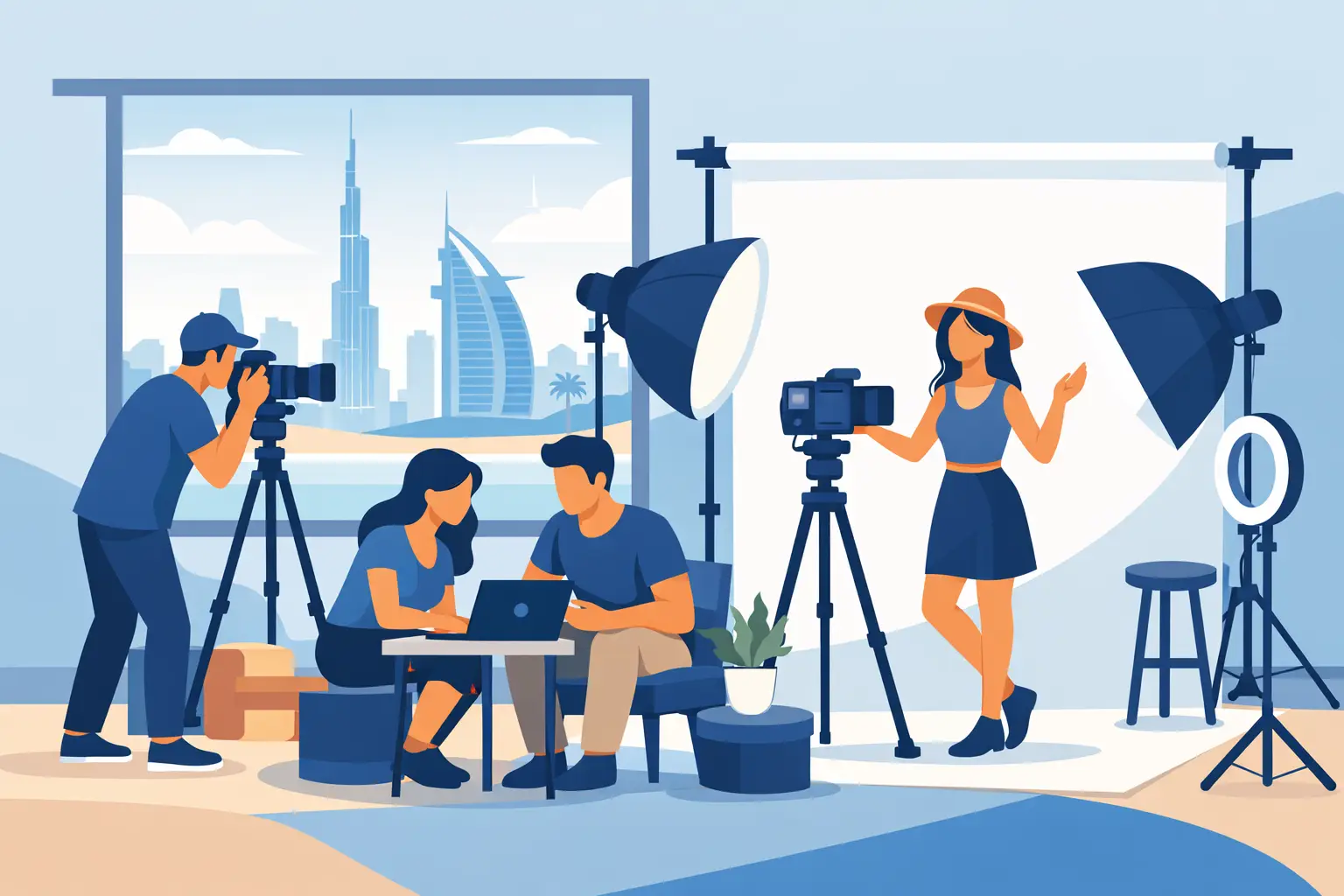
A shoot day in Dubai gets expensive the moment the crew is waiting on basics: a light that is missing, a background that needs building, audio that has not been tested, or a location that looks good in photos but cannot support a real production. The right photo studio rental Dubai option is not simply a room with a backdrop. It is a controlled production environment that keeps your team moving and turns booked hours into usable content.
For a photographer, production company, founder, or corporate marketing team, the decision comes down to one practical question: can the space support the format you need without creating a second layer of technical work? That answer affects the crew you bring, the equipment you transport, the number of setups you can complete, and how quickly finished assets reach your channels.
What a Photo Studio Rental in Dubai Should Solve
A studio should remove friction before the camera starts rolling. For stills, that may mean adequate shooting depth, a clean floor, reliable power, and room for lighting stands, product tables, talent, and a client monitor. For hybrid photo and video days, the requirements grow quickly. You need lighting that can be shaped for both formats, sound that is usable for interviews, and enough room for a crew to work without stepping into frame.
This is why the lowest hourly rate is not always the lowest production cost. A smaller blank room can work for a simple headshot session. But if your team needs product photos in the morning, founder-led Reels in the afternoon, and an interview setup before wrap, a technically prepared studio can save more time than it costs.
The useful standard is simple: book the space based on the output, not just the aesthetic. Decide what must be delivered by the end of the session, then choose the facility that can support that plan.
Start With the Format, Not the Background
Dubai shoots often combine several content needs into one call time. A business may need a month of social assets. An agency may need a campaign stills set plus vertical video. A speaker may need a polished presentation recording and clips for LinkedIn, Instagram, and event promotion.
Those are different production formats, even when they feature the same person. A white wall may be enough for a clean portrait, but it will not automatically create visual range for 25 short-form videos. Likewise, a dramatic LED background can be powerful for a presentation or branded campaign, but it is unnecessary if you are shooting a tightly framed jewelry catalog on a controlled tabletop.
Before you compare studios, define the primary format: product photography, portraits, fashion, social video, interviews, e-commerce, podcast-style recordings, presentations, or a mixed-content day. Then identify the secondary deliverables. This keeps the booking focused and prevents the common mistake of adding too many concepts once the clock is running.
A good production plan also separates what must happen live from what can be added in post. If a visual needs to react to talent, create depth in camera, or establish a premium environment, it may be worth using an LED screen or physical set. If it is a simple logo treatment or text overlay, editing may be the faster route. The right choice depends on the message, budget, and delivery deadline.
Check the Room Like a Producer
Photos can make any studio appear larger than it is. Ask for the operational details that determine whether your concept will fit.
First, look at usable floor area rather than a vague description of size. Can the studio hold the camera position, lighting, talent, props, and crew at the same time? A 90+ m² space gives a team more flexibility to create distance between subject and background, build multiple zones, and keep equipment out of the shot. It is particularly valuable when stills and motion need to happen in the same booking.
Second, confirm capacity. A studio that is comfortable for two people may become restrictive with a photographer, videographer, lighting assistant, stylist, makeup artist, client, talent, and producer. If your production involves a larger crew, book a space designed to accommodate it rather than relying on a tight turnaround between setups.
Third, ask what is ready on arrival. Lighting, grip, sound, power, changing areas, makeup space, mirrors, and playback capability all affect the schedule. “Available” and “set up for use” are not the same thing. For a fast content day, prepared equipment matters because every adjustment takes time away from filming or shooting.
Finally, evaluate the floor and surfaces. A mirror floor can add a high-end reflection for fashion, beauty, automotive-style visuals, and presenter content. It can also demand careful wardrobe choices, cable management, and lighting control. That is not a downside, but it is a production consideration worth planning for before talent arrives.
When LED Visuals Are Worth Booking
An LED screen changes what a studio can deliver in camera. Instead of relying on a single physical background, your team can build branded environments, cityscapes, abstract motion, product visuals, presentation graphics, or campaign-specific worlds behind the subject.
For corporate teams, this can make a presentation recording look more intentional than a standard office setup. For creators and personal brands, it creates variation across a batch of videos without moving locations. For production companies, it adds a virtual-production option when the concept benefits from controlled backgrounds and rapid changes between scenes.
There are trade-offs. LED visual production requires advance planning around screen content, camera angle, wardrobe, exposure, and moiré control. A busy graphic can distract from a presenter. Fine patterns and bright white elements can need testing. If the LED is central to the concept, arrive with the media prepared in the required format and schedule a short technical check before the main shoot.
Use the screen when it supports the story, not because it is available. A simple portrait or product shoot may look stronger against a clean, carefully lit background. The screen earns its place when it delivers variety, branding, or visual scale that would otherwise require multiple locations or a larger set build.
Build a Shoot Schedule That Produces More
The most efficient sessions are planned as content systems. Rather than filming one long video and hoping for clips later, structure the day around a set of repeatable outputs. A founder can record short direct-to-camera points, answer common customer questions, capture a longer interview, and create a small set of branded stills in the same session. The wardrobe, framing, and background can shift between blocks to give the final content a broader visual library.
Keep the first part of the booking for technical preparation and priority assets. Shoot the content that cannot be compromised while everyone is fresh and the schedule is protected. Use later blocks for variations, B-roll, alternate hooks, stills, and additional social takes.
For a four-hour content shoot, a realistic plan leaves room for setup, sound checks, wardrobe adjustments, and review. Trying to capture 30 completely different concepts with no preparation usually creates inconsistent quality. A tighter set of topics, filmed in several useful formats, gives editors cleaner material and gives your team more opportunities to publish.
If you are renting the facility only, assign one person to protect the schedule. If you are booking a turnkey package, agree on the output before the shoot: number of videos, aspect ratios, editing style, brand references, captions, and delivery timing. Clear formats prevent expensive assumptions after filming ends.
Rental Only or a Turnkey Production Package?
Rental-only is the right choice when you already have a trusted photographer, videographer, director, or production crew. You retain control of the creative process and can use a production-ready location as the base for your own equipment and workflow. It is a strong fit for agencies, crews with established lighting setups, and clients with a detailed shot list.
A turnkey package is more efficient when your business needs finished content but does not want to coordinate a location, crew, camera, lighting, sound, editing, and delivery separately. This is especially useful for social media batches, executive content, and corporate presentation videos where speed matters as much as the shoot itself.
At PROS.CRTV, studio rental starts from 500 AED per hour, with a 90+ m² Dubai facility built for crews of up to 20 people and equipped with LED visuals, lighting, sound, and a mirror floor. For teams that need more than raw footage, the production workflow can turn a single shoot into ready-to-publish Reels within 24 hours.
The better option depends on what you already own operationally. If you have a capable crew but need the right environment, rent the space. If your internal team needs polished assets without managing every production detail, package the studio with production and post-production support.
Questions to Settle Before You Book
Confirm the exact booking window, including setup and breakdown. Ask whether the studio can support your crew size, whether your preferred lighting and audio setup are included, and whether an LED screen requires files in advance. If you are bringing large props, product cases, or specialty equipment, confirm access and loading requirements early.
Also decide who approves footage on set. For branded campaigns, having the decision-maker available can prevent reshoots and protect delivery time. For social content, review a few early takes for framing, pace, and messaging, then keep the team moving once the format is approved.
The best studio day feels calm because the decisions were made before call time. Book a space that matches your deliverables, arrive with a clear shot plan, and let the room do what it should: keep the production focused on creating content people will actually want to watch.
Ready to shoot this?
Bring the brief to the stage — LED wall, mirror floor and a crew that turns ideas like this into finished content — same day on selected packages.
Book the studio