Social Media Videography That Ships in 24 Hours
Social media videography built for fast-moving brands: plan, shoot, edit, and publish polished short-form content without production delays at speed.
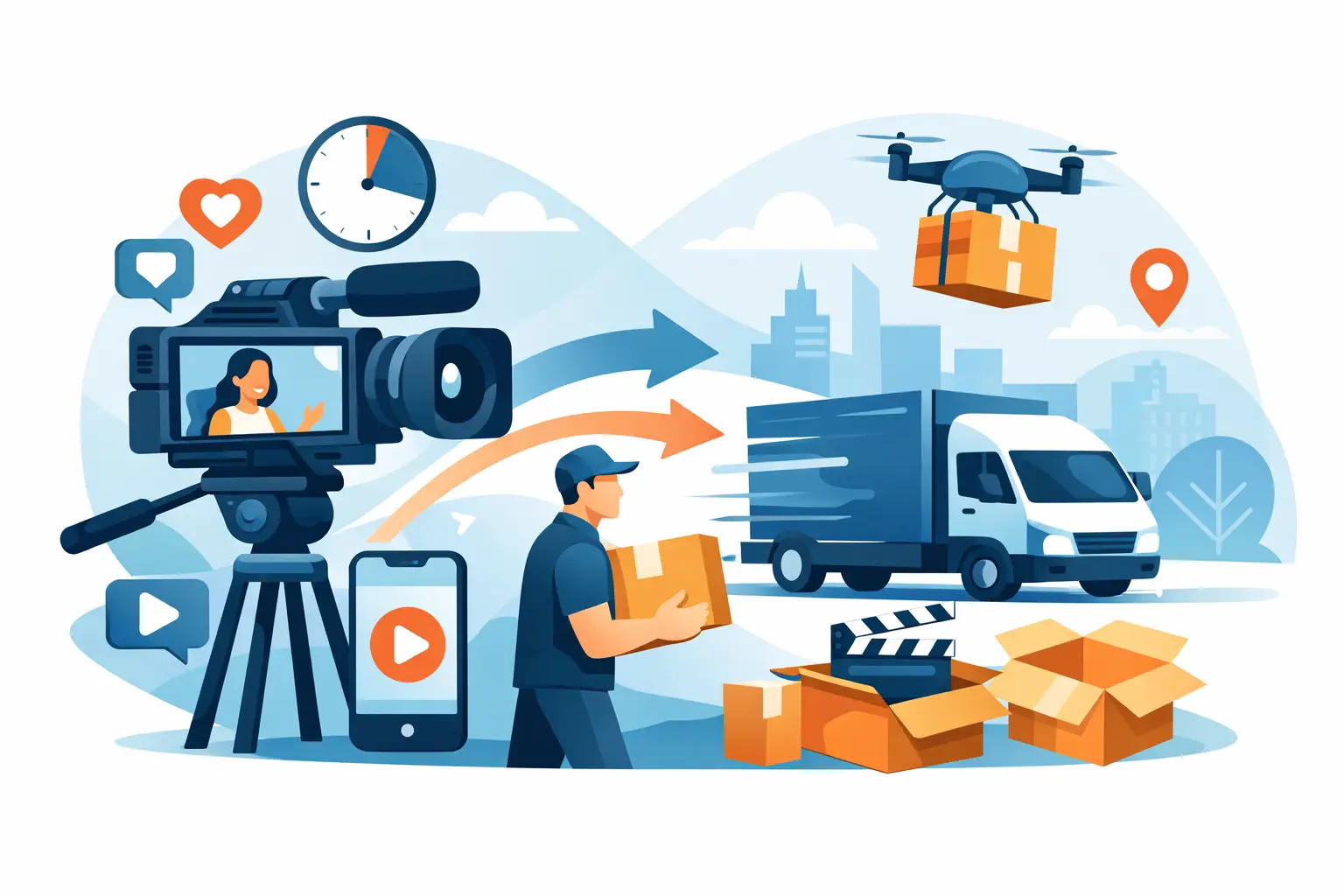
A content calendar does not fail because a brand lacks ideas. It fails when every video requires a new location, a new crew, scattered approvals, and another round of editing. Social media videography needs to operate closer to a production system: one prepared shoot, defined formats, and a reliable route from camera to published assets.
For founders, marketing teams, speakers, and personal brands, the goal is not simply to make a beautiful video. The goal is to leave a shoot with enough purposeful material to stay visible for weeks, without turning content creation into a full-time logistics project.
What Social Media Videography Must Deliver
Platform video has a short window to earn attention, but that does not mean it should be rushed or visually disposable. Strong short-form content makes a clear promise in the first few seconds, puts the presenter or product in a controlled visual environment, and gives the viewer one reason to continue watching.
The production standard has changed. A phone can capture a usable clip, but it cannot automatically solve audio, lighting consistency, camera movement, background control, brand styling, or editing pace. Those details shape whether a video feels credible enough for a company launch, a founder’s point of view, a recruitment campaign, or an offer that asks someone to spend money.
That is why the best social media videography starts with output, not equipment. Before choosing cameras or backgrounds, define what the shoot must produce: a month of Reels, a speaker presentation with cutdowns, product demonstrations, founder-led insights, or paid social variations. The format determines the workflow.
Plan the Shoot Around Publishable Formats
A four-hour shoot can generate 25 or more short videos when the team arrives with a content map. Without one, even a well-equipped studio becomes a place to improvise, repeat takes, and lose time deciding what to say next.
Build each filming day around a small number of repeatable content formats. For example, a founder can record direct-to-camera opinions, answer frequent customer questions, explain a process, react to industry assumptions, and deliver concise calls to action. The set can stay consistent while the messaging changes. That consistency makes the final feed feel intentional rather than random.
Preparation should answer four operational questions:
- Who is speaking, and what authority or experience makes the message worth hearing?
- What is the single takeaway for each video?
- Which videos need a product, screen graphic, or supporting visual?
- Where will the content run: Reels, TikTok, LinkedIn, YouTube Shorts, paid placements, or several channels?
The same core footage can serve multiple placements, but it should not be copied blindly. A short executive insight may work well on LinkedIn with a more measured edit. The same idea can become a faster, tighter Reel with stronger opening text and a direct visual hook. Capture the source material once, then edit for the context in which people will see it.
The First Three Seconds Need a Production Decision
Many teams treat the opening line as a writing problem. It is also a production problem. If the first shot is poorly lit, hesitant, noisy, or visually flat, even a smart opening statement loses force.
Start with movement, a clear face, a product detail, a bold statement on screen, or a visual change that supports the message. This does not require gimmicks. A speaker stepping into frame, a clean LED background that reinforces the subject, or a close product shot can be enough when it is deliberate.
Avoid starting with a long introduction. Viewers do not need a presenter’s biography before receiving value. Put the useful claim first, then establish context. “Most teams waste half their content day waiting for setup” is stronger than “Hi, I’m Alex, and today I want to talk about content production.”
The trade-off is brand tone. A financial advisory firm, corporate leader, or premium B2B business may not want the aggressive pacing used by consumer creators. That is fine. The opening still needs clarity and confidence. Fast does not have to mean frantic.
Use a Studio When Control Is Part of the Brief
Location shoots have their place. A restaurant needs its atmosphere. A construction company may need real job-site proof. A hospitality brand benefits from showing the experience customers are buying. But when the priority is volume, visual consistency, presenter-led messaging, or rapid delivery, a studio gives the team control that a public location cannot.
A production-ready studio reduces the hidden costs that slow down social content: finding power, managing ambient sound, waiting for changing daylight, moving furniture, and rebuilding a lighting setup after every interruption. It also gives speakers and founders a calmer setting for recording multiple takes without an audience watching.
An LED screen adds another decision point. It can create a branded environment, place a presenter in a visual world that would be expensive to build physically, or support a presentation with relevant graphics. Used well, it expands visual variety without requiring several location changes. Used carelessly, it can distract from the person and message. Keep backgrounds purposeful, readable, and aligned with the subject.
At PROS.CRTV, the Dubai studio is built for this type of efficient content day: a large LED screen, mirror floor, lighting, sound, and room for a crew of up to 20. The point is not to add technology for its own sake. It is to keep production moving while the team captures several formats in one controlled environment.
Record for the Edit, Not Just the Take
The easiest way to improve content output is to shoot with editing in mind. Record clean versions of the main message, then capture alternative hooks, different endings, product close-ups, hand movement, screen interactions, and short pauses between statements. These inserts give the editor options to tighten pacing and cover cuts without making the final video feel patched together.
For presenter-led videos, ask the speaker to deliver each idea in a few complete sections rather than trying to perform a perfect 60-second monologue. A clear hook, two or three supporting points, and one closing line are easier to edit and easier for viewers to follow.
Audio deserves the same discipline. Viewers will tolerate an imperfect image longer than muffled speech, air-conditioning noise, or room echo. Use proper microphones, monitor sound before recording, and keep the room quiet. Captions remain valuable because many people watch without sound, but captions should reinforce good audio, not rescue bad audio.
Shoot vertically when short-form is the primary use case. If the project also needs horizontal video, plan for it from the beginning with camera framing, background composition, and safe space for graphics. Trying to crop everything later often removes the very visual detail that made the original shot effective.
Build Approval Into the Production Day
Fast turnaround is only useful when approvals are also fast. A team can edit 25 Reels quickly, but content still stalls if stakeholders debate fonts, captions, or messaging after the shoot.
Set the rules before cameras roll. Agree on the visual treatment, logo use, caption style, editing pace, and decision-maker. If several departments need input, appoint one person to consolidate feedback. This protects the production timeline and prevents five versions of the same note.
Same-day or next-day delivery is especially valuable for event content, announcements, campaign launches, and executives with limited availability. It is also useful for ongoing personal-brand content, where a single shoot can become a ready-to-publish library instead of a folder of raw footage waiting for attention.
Measure More Than Views
Views matter, but they are not the only signal that content is working. A short video can have modest reach and still generate qualified messages, meeting requests, profile visits, product page traffic, or stronger recognition among the people a business wants to reach.
Review performance by format and purpose. Which hooks retain attention? Which topics bring comments from the right audience? Which direct-to-camera videos create inquiries? Which product clips support paid campaigns? The answer should shape the next shoot, not sit in a monthly report.
Content volume is valuable only when it makes iteration possible. Produce enough assets to test messages, but keep the system disciplined enough to learn from them. A prepared studio day, a defined set of formats, and edits delivered while the campaign is still relevant give social media videography its real commercial advantage: your team can publish, assess, and improve before momentum disappears.
Ready to shoot this?
Bring the brief to the stage — LED wall, mirror floor and a crew that turns ideas like this into finished content — same day on selected packages.
Book the studio