Video Production That Delivers More Than a Shoot
Video production for fast-moving brands: plan, shoot, edit, and publish polished content from one Dubai studio with fast, defined delivery.
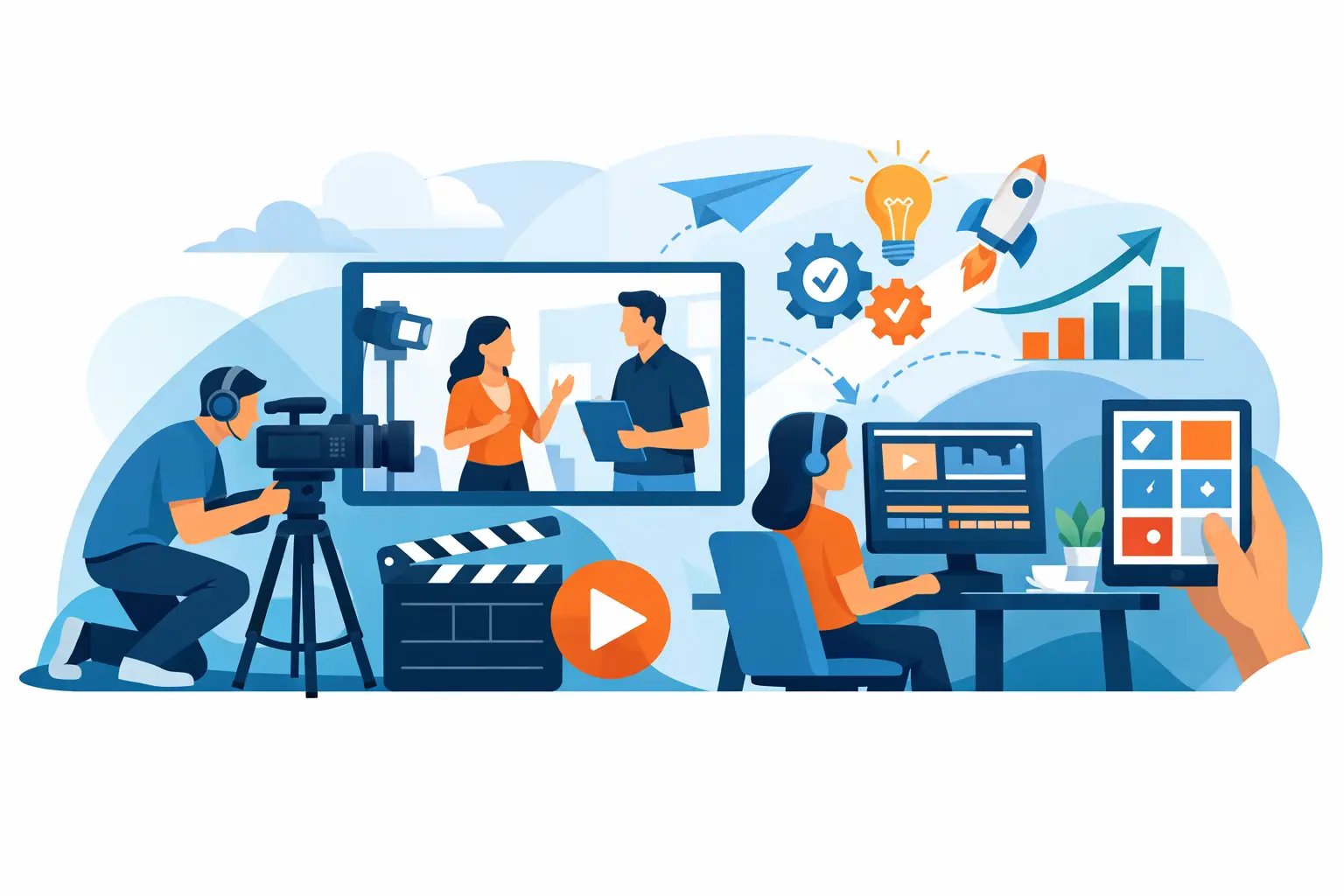
A camera day is expensive when it produces only one finished video. Strong video production turns the same time, crew, and location into a usable content system: a hero film, presenter clips, vertical Reels, product cutdowns, stills, and assets your team can publish while the campaign still has momentum.
That is the standard businesses should expect. Whether you are launching a product, building a founder-led brand, recording a corporate presentation, or renting a studio for a commercial crew, the question is not simply, “Can we get good footage?” It is, “What will be ready to use after the shoot?”
What Video Production Should Deliver
The visual quality matters. So do lighting, sound, framing, movement, and a clear edit. But polished footage alone does not solve a marketing or communications problem. A business needs the right formats, enough volume for its publishing schedule, a defined approval process, and a delivery timeline that fits the campaign.
For a personal brand, that may mean 25 or more short-form clips from a focused four-hour shoot. For a corporate team, it may mean a keynote recording, a presentation on an LED screen, speaker soundbites, and vertical edits for LinkedIn or social channels. For a production company, it may mean a controlled studio environment that lets the crew execute its own treatment without losing hours to basic setup.
The best approach depends on the objective. A single cinematic brand film can justify a larger crew, custom set design, and multiple shooting days. A high-volume social campaign needs a tighter system: prepared lighting, repeatable setups, concise scripts, and an editor who understands where each clip will live. Trying to use one workflow for both usually wastes time.
Start With the Output, Not the Camera
Many shoots slow down before the camera is even turned on because the team begins with gear instead of deliverables. The better starting point is a production brief that defines what must exist at the end of the project.
Decide where the content will be used. Vertical 9:16 videos need different framing from a widescreen presentation film. A presenter speaking to camera may need clean eye lines, a confident teleprompter-style script, and on-screen graphics. A product video may need close-up coverage, controlled reflections, and enough alternate angles to support several edits.
Then determine the content volume. If your team wants a month of social content, do not arrive with three broad talking points and hope they become 30 videos. Build a topic bank with distinct hooks, short scripts, and clear calls to action. One core idea can become several clips, but only when the shoot captures intentional variations rather than accidental leftovers.
A practical brief should establish the audience, message, formats, deliverable count, visual references, talent, deadlines, and decision-maker. It does not need to be a 40-page document. It does need to prevent the most common production problem: discovering competing expectations on set.
Define the Message Before the Talent Arrives
On-camera talent loses energy quickly when every take involves rewriting the message. Founders and subject-matter experts are especially vulnerable to this because they know too much about their subject. They can explain every detail, but audiences need a clean point of view in the first few seconds.
Write around one idea per clip. Start with a direct problem, a surprising statement, or a practical result. Follow with the explanation, then close with the next action. This structure keeps scripts natural and gives editors a clear path to short-form cuts.
For presentations and corporate recordings, prepare the screen content in advance and test it at the actual camera angle. Slides that look fine on a laptop can become unreadable behind a speaker. Large type, limited copy, high contrast, and deliberate placement are not design preferences. They are production decisions.
Choose a Studio That Removes Friction
Location affects both the look of the content and the pace of the day. A blank room may appear flexible, but every missing element becomes a task: lighting, sound treatment, power, background control, equipment placement, crew movement, and client monitoring. Those small decisions add up quickly.
A production-ready studio gives the team a reliable base. Look for enough floor area to separate talent, camera, lighting, and client viewing; a lighting and sound setup that is already prepared; and a layout that supports different shooting angles without rebuilding the room between every segment.
An LED screen changes what can be achieved in one place. It can support branded backdrops, motion graphics, product environments, presentation visuals, and virtual-production concepts without physically transporting a crew across multiple locations. It is not automatically the right choice for every shoot. A minimal paper backdrop or practical set can feel more authentic for certain founder videos. But when the concept calls for controlled visual environments, a large-format screen can save substantial production time.
At PROS.CRTV, the 90+ m² Dubai studio is designed for this type of work, with an LED screen, mirror floor, lighting, sound, and room for crews of up to 20 people. That matters when a campaign involves more than one person behind the camera. Producers, stylists, makeup artists, agency clients, and talent need space to work without interrupting the set.
Build the Shoot Day Around Repeatable Setups
A fast shoot is not a rushed shoot. It is a prepared one. The production team should know the order of scenes, the required setups, the wardrobe changes, and the exact assets that need to be captured before the first take.
Group content by setup rather than by script order. Record every seated presenter clip while the camera, lighting, and microphone are in place. Move to the standing setup next. Capture product close-ups or B-roll while talent changes wardrobe. This protects the schedule and reduces the visual inconsistency that happens when a team repeatedly breaks down and rebuilds the set.
Leave room for natural variations. If a founder delivers a useful line in a different way, capture it. If a product detail looks stronger at another angle, get the alternate shot. The goal is not to make the day rigid. It is to make improvisation productive instead of disruptive.
Sound deserves the same attention as image. Viewers will tolerate a slightly imperfect visual more readily than echo, background noise, or inconsistent speech levels. Test microphones before talent is on set, monitor audio throughout the session, and keep the room quiet during takes. Fixing poor sound later costs more than getting it right at the source.
Edit for the Platform and the Deadline
Editing is where recorded material becomes content people will actually watch. It is also where many projects lose speed. If a team waits weeks for a first cut, the footage may still be polished, but the business opportunity may have moved on.
Define the edit package before shooting. Specify the number of finished videos, aspect ratios, caption style, graphic treatment, revision rounds, and delivery date. Same-day selects may be enough for a live event. For social content, ready-to-publish Reels within 24 hours can make the difference between a campaign that stays active and one that stalls in review.
Short-form edits need an aggressive first few seconds, but that does not mean every clip should feel frantic. The right pacing depends on the audience and message. A direct founder opinion can work with simple cuts and captions. A product launch may need faster visual transitions. A corporate thought-leadership video may need a calmer rhythm that protects credibility.
Keep the master files organized from the start. Clear file names, labeled takes, approved brand graphics, and designated feedback owners prevent the familiar chain of confused messages that turns a simple edit into a delayed project. Speed comes from decisions made early, not from asking an editor to work faster at the end.
Make One Shoot Work Harder
The strongest production investment is not measured by how impressive the set looked for a day. It is measured by how much useful communication it creates afterward. One planned session can supply campaign assets, sales materials, social videos, speaker clips, website visuals, and future B-roll for weeks or months.
That requires a shift in mindset. Treat the shoot as a content operation, not a single creative event. Capture the main message, then capture the details that extend its life: alternate openings, objections and answers, behind-the-scenes moments, close-ups, still frames, and clean room tone for edit flexibility.
A studio, crew, and camera package should make this easier, not create another layer of coordination. When the environment is ready, the formats are defined, and delivery is planned before filming begins, video becomes a predictable business tool. Bring a clear message, reserve enough time to capture it properly, and leave with assets your audience can see while they still matter.
Ready to shoot this?
Bring the brief to the stage — LED wall, mirror floor and a crew that turns ideas like this into finished content — same day on selected packages.
Book the studio