How a Virtual Production Studio Saves Shoot Time
A virtual production studio gives teams polished LED-screen visuals, prepared lighting, and faster content delivery - without a complex location build.
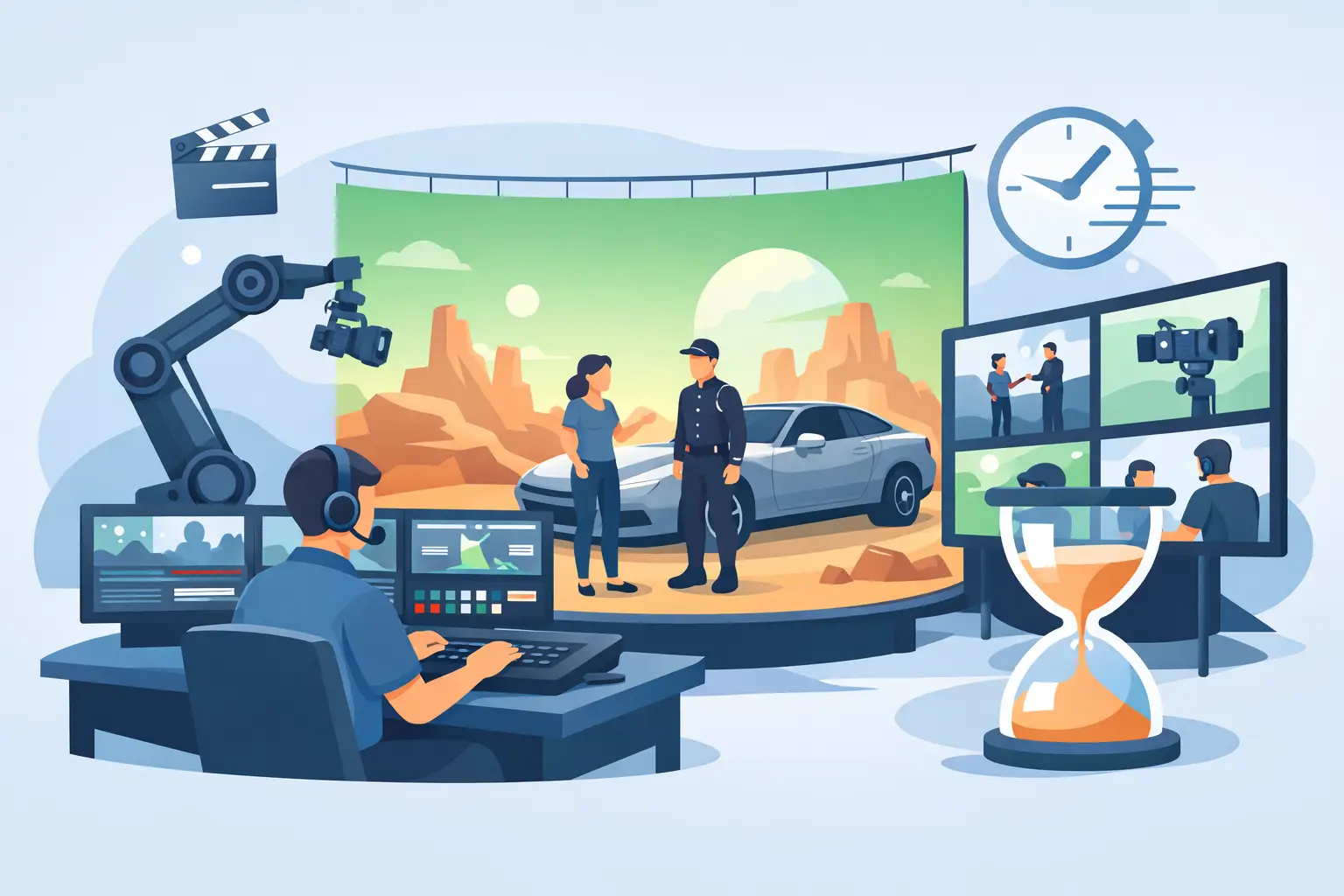
A virtual production studio is not simply a room with a large screen. It is a production environment built to replace slow location changes, disconnected vendors, and the familiar problem of leaving a shoot with great footage but nothing ready to post. For Dubai teams working on campaigns, Reels, presentations, product launches, or personal-brand content, the value is simple: arrive with a plan, shoot multiple formats in one place, and move quickly into delivery.
The LED wall gets the attention, but the real advantage is operational. When the screen, lighting, sound, floor, camera positions, and crew workflow are already considered, your team spends less time building a set and more time capturing usable material.
What Makes a Virtual Production Studio Different
Traditional studio rental gives you space. A virtual production setup gives you a controllable visual world inside that space.
An LED screen can place a presenter in a branded environment, a speaker on a conference-style stage, a product in a stylized campaign setting, or a creator in a series of visual backdrops without moving between locations. Instead of printing a new background, booking another venue, or relying on green-screen work later, the environment is visible during the shoot.
That changes decisions on set. The presenter can react to the actual visual. The director can frame the shot against the intended background. The client can approve the look before the cameras stop rolling. For content with tight deadlines, this is far more practical than discovering issues only after editing begins.
A professional virtual production studio also needs more than an LED wall. Screen quality, pixel pitch, brightness, refresh rate, color handling, camera settings, lighting control, and audio treatment all affect the final image. A powerful screen in an unprepared room can still produce reflections, poor skin tones, flicker, uneven exposure, or sound that needs unnecessary repair.
The Best Use Cases Are Usually Content-Heavy
Virtual production is often associated with cinematic filmmaking. It can support that work, but many of the strongest commercial uses are faster and more repeatable.
For founders and personal brands, one focused shoot can produce a month of short-form content. A single presenter can record direct-to-camera advice, product explainers, announcements, interviews, and branded hooks while changing the screen background between formats. The result feels varied without creating the logistics of five separate locations.
For corporate teams, the screen becomes a presentation tool that looks better on camera than a standard meeting room. Trainers can teach beside slides. Executives can record strategy updates against branded visuals. Event speakers can create polished pre-event videos, opening segments, or post-event recaps with consistent sound and lighting.
Production companies and agencies use the studio differently. They may bring their own director, camera team, creative treatment, and client while using the facility as a prepared technical base. This is the right model when a crew needs control over the production but does not want to spend hours sourcing a suitable space, building a screen setup, and coordinating separate lighting or sound rentals.
Product and fashion shoots can benefit too, particularly when a campaign needs movement, scale, or visual variation. The mirror floor can extend the scene and create a premium reflection effect. Still, not every concept needs virtual production. If the final deliverable depends on natural daylight, a real architectural location, practical interaction, or a highly tactile environment, a location shoot may be the better choice. The studio should serve the creative idea, not force every idea onto a screen.
Plan the Shoot Around Deliverables, Not Just Hours
The most expensive studio day is often not the one with the highest hourly rate. It is the day without a shot plan.
Before booking, decide what needs to be published after the shoot. If the goal is 25 Reels, do not arrive with one broad topic and hope enough clips appear. Define the content pillars, hooks, talking points, on-screen visuals, wardrobe changes, and final formats. A four-hour shoot can create substantial volume when the team knows exactly what it is capturing.
For example, a founder might divide a session into authority content, customer objections, behind-the-scenes clips, product offers, and personal stories. Each pillar can use a different LED background or visual treatment while keeping the same lighting setup. That creates a useful visual rhythm in the feed without slowing down the day.
Corporate shoots need the same discipline. Plan presentations in modules rather than recording one long speech. Capture the full version first, then record concise standalone answers, key takeaways, and strong opening lines for social distribution. This gives the marketing team assets for internal communication, LinkedIn, event promotion, and sales follow-up from one recording block.
Bring the Right Assets for the LED Screen
A virtual set is only as convincing as the content displayed on it. Prepare presentation slides, logos, motion graphics, background images, videos, and brand colors in advance. Confirm the screen resolution and file requirements with the studio before shoot day, especially if your visuals include small text, fine patterns, or product colors that need to remain accurate.
Keep screen design clean. Large type, clear contrast, and deliberate spacing work better on camera than dense slides designed for laptop viewing. If a presenter will stand in front of the screen, leave room around the key information. The audience should not have to choose between reading the slide and seeing the speaker.
Speed Comes From a Prepared Workflow
Fast delivery does not mean rushing the creative work. It means removing unnecessary handoffs.
A production-ready facility has the core environment in place before the client arrives. That includes a usable shooting area, configured LED screen, lighting options, sound capability, and enough space for a practical crew workflow. In a studio that can accommodate crews of up to 20 people, the director, camera operators, client team, talent, stylist, and producer can work without turning the set into a bottleneck.
The next step is a clear production sequence. Start with the most important hero content while energy is high. Record long-form material and critical presentations first. Then move into cutdowns, alternate hooks, testimonials, B-roll, and social-first variations. This protects the assets that matter most if the schedule changes later.
Editing should be considered before filming, not after. If the goal is next-day Reels, capture clean starts and stops, repeat important lines in two or three versions, and leave intentional pauses for captions or graphic overlays. A short-form editor can work much faster when the footage is organized around the final format.
At PROS.CRTV, this approach is built around a 90+ m² Dubai studio, a large-format LED screen, mirror floor, lighting, and sound in one prepared space. Teams can rent the facility from 500 AED per hour or use a turnkey production package that combines shooting, editing, recordings, and ready-to-publish short-form assets. For clients with a clear content plan, the target is practical: move from shoot to ready Reels within 24 hours.
Questions to Ask Before You Book
The right studio is not defined by its screen size alone. Ask whether the available space fits your crew, whether the LED wall supports your planned framing, and what is included in the rental. Clarify access time, setup time, technical support, sound options, and whether you can bring your own equipment and operators.
If you are booking a turnkey package, ask for the deliverables in concrete terms. How many edited clips are included? What lengths and aspect ratios will be delivered? Are captions, brand graphics, color work, or revisions part of the package? When will the final files arrive? Defined answers protect both the creative result and the budget.
Also consider whether you need a studio partner or simply a facility. A seasoned production company may only need the room and infrastructure. A founder filming their first content batch may benefit from help shaping scripts, directing delivery, recording efficiently, and organizing the final edits. Neither option is better by default. The correct choice depends on the experience of your team and the amount of coordination you want to own.
The strongest studio day has a clear outcome before the first light turns on. Book the environment that fits the work, arrive with a deliverable-led plan, and make every hour produce content your audience can actually see.
Ready to shoot this?
Bring the brief to the stage — LED wall, mirror floor and a crew that turns ideas like this into finished content — same day on selected packages.
Book the studio