How Dubai Video Studios Shape Better Shoots
Dubai video studios for LED shoots, brand content, and ready-to-post Reels. Plan the right space, crew setup, and package for smoother production days.
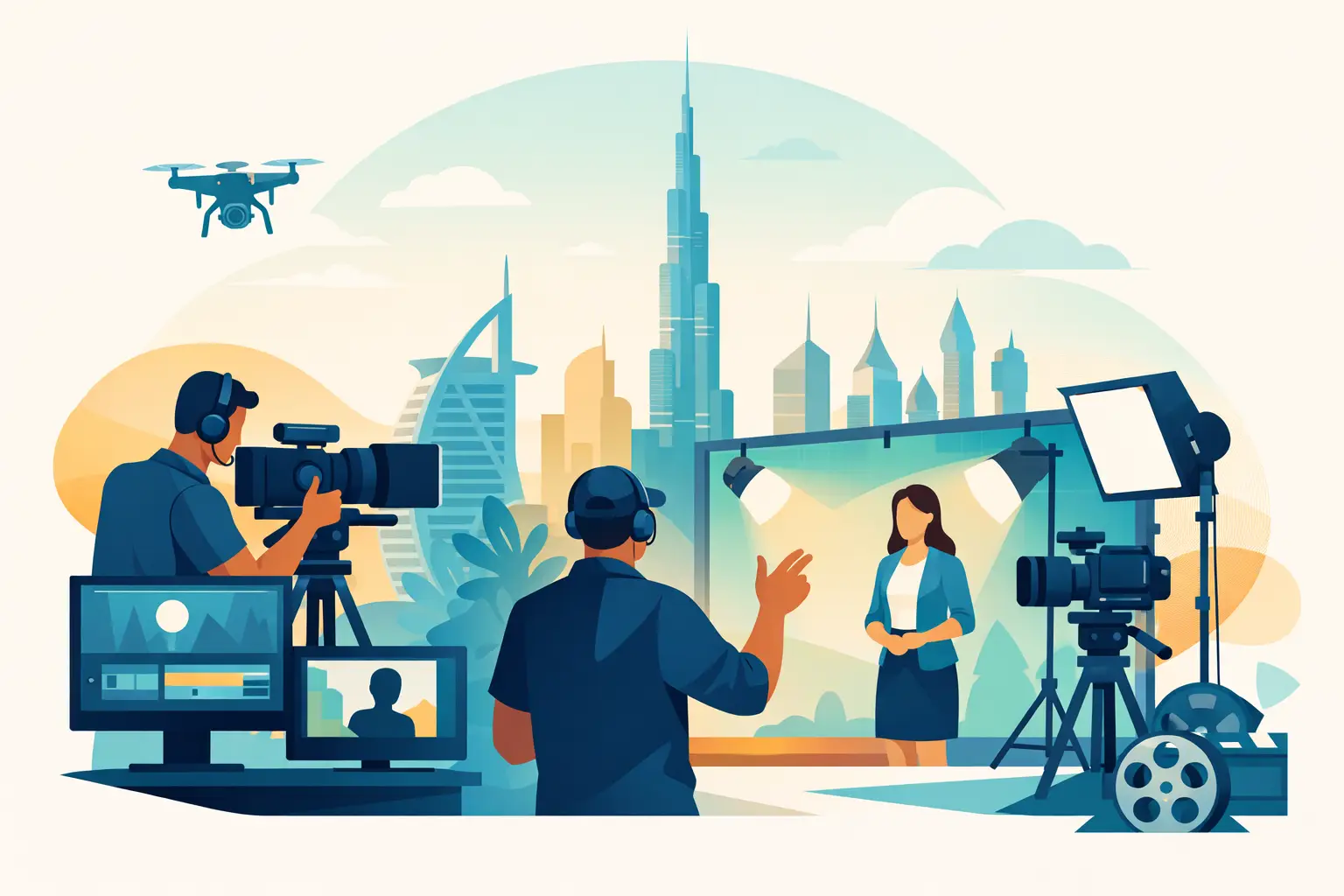
A studio booking can either protect your production day or quietly drain it. The difference is rarely just the camera. Dubai video studios need to support the way your team actually works: loading in, lighting talent, managing sound, reviewing footage, changing setups, and leaving with content that is ready to move.
For a production company, that means room for the crew and reliable technical infrastructure. For a founder or marketing team, it means not spending half the day coordinating a separate videographer, editor, location, lighting rental, and content plan. The right studio brings the environment, process, and deliverables into one controlled production day.
What to look for in Dubai video studios
A good-looking room is not automatically a production-ready studio. Before you book, assess the space against your shot list, crew size, visual direction, and required turnaround. A tight, aesthetic location can work for one-person talking-head content. It becomes a problem when you need a client monitor, sound operator, lighting adjustments, multiple camera angles, or space to move talent between setups.
Start with usable floor area rather than promotional photos. A 90+ m² studio gives a small commercial crew room to work without constantly moving stands, cases, and people out of frame. It also gives business clients enough physical separation between the camera position, presentation area, lighting, and production team. For crews of up to 20 people, that space matters well before the first take.
Then look at what is already installed. A studio with prepared lighting, sound capability, power access, and production furniture reduces setup pressure. It does not eliminate the need for a proper technical plan, especially for complex commercial work, but it removes a large amount of basic friction. Ask what is included, what you can bring, and whether your own crew retains control of the setup.
The LED screen changes the kind of content you can make
A large LED screen is more than a background. It can become a presentation surface, a branded environment, a virtual location, or a visual element that responds to the story you are telling. This is particularly useful when you need polished visuals without the travel, permits, weather risk, or schedule demands of a location shoot.
For a speaker, the screen can carry slides, motion graphics, key messages, or a branded keynote environment. For a product campaign, it can place talent in a controlled visual world with changing scenes across the same shoot. For social content, it can create enough variety to make a concentrated recording session feel like content captured across several locations.
There is a trade-off. LED backgrounds require preparation. Screen content must be designed at the right resolution and tested for color, exposure, and camera settings. If the visual is central to the shoot, plan it before the shoot day rather than treating it as a last-minute add-on. The screen is powerful when it supports the concept, not when it is used simply because it is available.
Check the floor, sound, and lighting conditions
Small production details become visible fast on camera. A mirror floor can add depth and a premium reflection to wide shots, fashion content, music visuals, and brand films. It can also create reflections you may not want in close-ups or product shots. Discuss camera angles and lighting direction before you build your schedule around it.
Sound deserves the same attention. If you are recording a presentation, interview, podcast segment, testimonial, or executive message, clean audio is not optional. Confirm whether the studio has a controlled recording setup and determine who is responsible for microphones, mixing, backups, and monitoring. A strong visual cannot rescue an unclear voice recording.
Lighting should be flexible enough for your format. A beauty setup, a corporate interview, a product demonstration, and a cinematic commercial do not use the same approach. Prepared equipment speeds up the day, but production professionals should still confirm fixture types, modifiers, available power, and whether the studio team can support a specific lighting plan.
Choose the booking model that matches the job
Studio rental and turnkey production solve different problems. The smartest option depends on whether you already have a crew, a locked concept, and an editing workflow.
Hourly rental is the right choice when your production company, agency, photographer, or videographer needs a technically equipped base while maintaining full creative control. You bring the crew, camera package, and production plan. The studio supplies the prepared environment. This model is especially effective for shoots where your team already knows its roles and needs a dependable place to execute.
At PROS.CRTV, studio rental starts from 500 AED per hour, making the cost structure easy to understand before you schedule the day. For an experienced crew, that clarity helps protect the budget from the usual location-based surprises.
A turnkey package works better when the real goal is output, not simply access to a room. A personal brand operator may need a month of video content but have no interest in managing a camera operator, lighting, editing, framing, captions, and delivery folders. A business owner may need product explainers, founder clips, testimonials, and short ads from one session. In those cases, a package with shooting and editing included is usually more efficient than sourcing each part independently.
The same applies to corporate teams. If an executive is booked for a short window, the production needs to be structured around that availability. Pre-set sound and lighting, a prepared LED presentation, recording support, and edited short-form clips can turn a two-hour appearance into a useful library of internal and external communications.
Plan for content volume, not just one hero video
Many teams still book a studio with one finished video in mind. That approach can be expensive because the setup time remains almost the same whether you record one message or 25. If talent, lighting, camera, and the studio are already in place, plan enough formats to justify the session.
A focused four-hour shoot can generate a strong content bank when the scripts and shot sequence are prepared. One core topic can become a long-form expert answer, several direct-to-camera Reels, a short promotional cut, behind-the-scenes material, and still frames for future posts. The work happens before the camera rolls: decide what each asset needs to say, where it will be published, and how the opening line should earn attention.
Do not confuse volume with repetition. Twenty-five clips that all begin with the same generic message will not create a useful content library. Build variation into the plan. Use different angles, different LED visuals, different hooks, and distinct calls to action. Record short answers around customer objections, product use cases, industry opinions, process explanations, and founder stories.
For social media, fast delivery changes the value of the shoot. Content loses momentum when it sits in an editing queue for two weeks. If your campaign, event, launch, or thought-leadership topic is current, aim for a workflow that takes footage from shoot to ready-to-post Reels within 24 hours. That requires agreed formats, brand references, editing expectations, and approval ownership before the shoot day.
Build a production day that stays on schedule
The most efficient studio shoots are decided before the crew arrives. Share a concise brief with the goal, audience, platforms, visual references, scripts or talking points, branding assets, and final deliverables. For LED work, send screen assets early enough for testing. For a corporate presentation, confirm the exact slide version and avoid replacing it five minutes before recording.
Schedule the day in blocks. Begin with technical checks and the highest-priority material while talent is fresh. Group shots by lighting and camera position rather than recording content in the order it appears on a publishing calendar. Capture alternates for key lines, then move to secondary formats once the essential content is secured.
Leave time for playback and approval. A quick review on set can catch an incorrect title, a distracting reflection, a missing brand message, or an audio issue before it becomes an editing problem. This is especially valuable when executives, clients, or remote stakeholders have limited availability.
The right studio is a production advantage
The best studio does not force your concept to fit its limitations. It gives your crew the space and tools to execute, or it gives your business a defined path from idea to published content without building a production department from scratch.
Book around the outcome you need: a controlled LED commercial, a full day for your crew, a content batch for the next month, or a presentation that needs to look as credible as the person delivering it. When the format, setup, and turnaround are decided before shoot day, the camera becomes the easy part.
Ready to shoot this?
Bring the brief to the stage — LED wall, mirror floor and a crew that turns ideas like this into finished content — same day on selected packages.
Book the studio