Mirror Floor Studio Rental for Better Shoots
Choose a mirror floor studio rental in Dubai with the space, LED visuals, lighting, sound, and workflow needed to move from shoot to ready content fast.
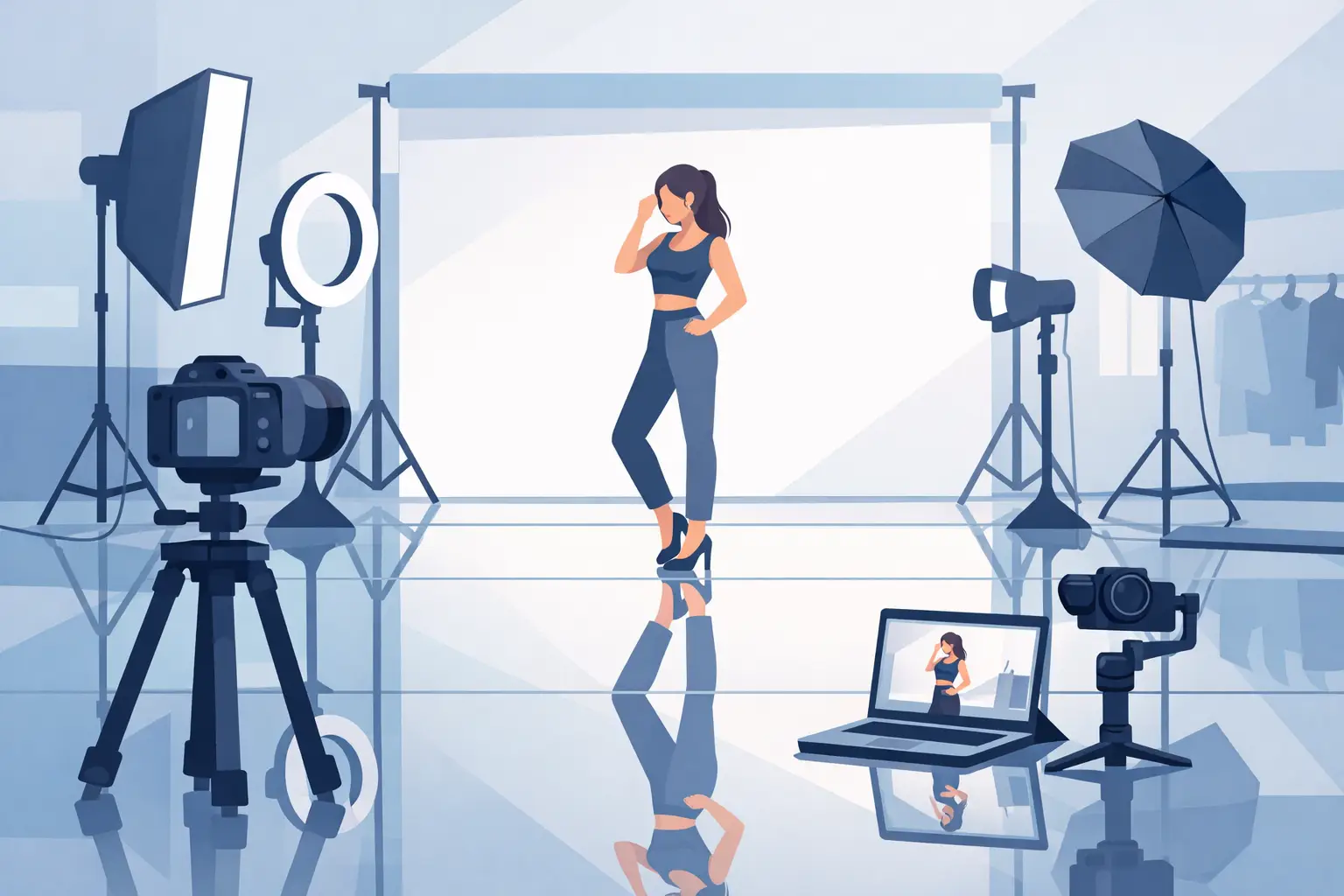
A mirror floor studio rental changes the frame before the camera starts rolling. It gives fashion campaigns, music videos, brand films, interviews, and Reels a polished reflective surface that makes lighting, movement, products, and LED visuals feel bigger on screen. But the floor alone is not the production plan. The studio needs enough room, the right lighting control, a clear technical setup, and a workflow that keeps the day moving.
For a commercial shoot, the best rental is not simply the most photogenic room. It is the space that lets your crew arrive, build the shot, record cleanly, and leave with footage ready for a fast edit. Here is what to look for before you book.
What a mirror floor adds to a production
A mirror floor creates depth without needing an elaborate physical set. It reflects talent, products, light sources, and on-screen graphics, creating symmetry and a sense of scale that is difficult to reproduce in post-production. When it is paired with a large LED screen, the floor can extend the environment below the subject, whether the background is a graphic campaign, an abstract color field, a city scene, or presentation visuals.
This setup works especially well when the concept depends on movement. A dancer, performer, speaker, or model has more visual presence when their silhouette is reflected beneath them. For product work, the reflection can make a launch video feel premium with a relatively focused set build.
There is a trade-off. The surface shows everything: shoe marks, cables, light stands, stray tape, and poorly planned angles. It rewards a prepared crew and a tight visual plan. A mirror floor should be treated as part of the composition, not as a decorative feature you decide to use after setup.
How to choose a mirror floor studio rental
Start with the shot list, not the room photos. Ask what must happen in the space during the rental: a full-body performance, a seated interview, a product reveal, a panel discussion, a presentation, or a high-volume social shoot. Each format puts different demands on floor area, ceiling height, audio, power, and camera positions.
Check usable space, not just square footage
A spacious studio gives the camera room to work. You need distance between the lens and the subject, space for lighting, a monitor position, and clear lanes for crew movement. For wider shots, multiple subjects, or a moving gimbal setup, a cramped room can quickly limit what is possible.
A 90+ m² studio is a practical starting point for crews that need a working set rather than a small content corner. It can support a team of up to 20 people when the schedule and set plan are organized. That matters for agencies, production companies, photographers, and videographers bringing their own operators, talent, stylists, and clients.
Also ask where crew cases, wardrobe, and personal items will sit. A clean reflection requires an uncluttered frame. If every bag and cable case ends up beside the set, you lose time cleaning angles between takes.
Make the LED screen part of the plan
An LED screen can do far more than display a logo behind a speaker. It can create a controlled visual environment without a location change, give a presenter branded slides, or provide a color and motion source that works with the mirror floor. The result can look intentional and dimensional when the screen content is designed for camera.
Confirm the screen size, resolution, refresh behavior, input options, and the studio's playback process. If you are filming at specific frame rates or using a particular camera system, test for flicker before the main shoot. Bring visuals in the requested format and allow time to check how they render on camera, not only on a laptop.
For business content, keep LED graphics simple. Oversized text, clean brand colors, and a clear visual hierarchy will perform better than dense presentation slides. The viewer should focus on the speaker, not struggle to read a wall of information in a vertical video.
Confirm lighting and sound are ready to use
A studio can have excellent architecture and still create a slow shoot if every light, modifier, and audio channel must be sourced and built from scratch. Ask what is included, what needs to be added, and who is responsible for operating it. For a small team or first-time studio user, prepared lighting and sound can remove several production problems before they happen.
Reflective surfaces need deliberate lighting. Hard sources may create unwanted reflections, while soft light can keep skin tones clean and reduce distracting glare. The right approach depends on the mood: glossy and high-contrast for a performance piece, or controlled and flattering for a founder-led video. Plan where lights will appear in the floor reflection and decide whether that visibility supports the look.
Sound deserves the same attention. A polished presentation loses value when room echo, air conditioning, or inconsistent mic levels make the message difficult to follow. If the shoot includes dialogue, record a test, listen back on headphones, and keep the room quiet during takes.
Book time for setup and resets
Hourly rental can be efficient, especially when the studio is production-ready and your crew arrives prepared. It is less efficient when the call time includes an unfinished shot list, untested screen assets, or talent deciding on wardrobe under pressure.
Build the schedule around setup, camera and audio tests, the main shoot, resets, and pack-down. A four-hour booking can produce a month of short-form content when the formats are planned in advance. It can disappear quickly if every Reel is treated as a separate concept with a new lighting setup.
Prepare for a clean mirror-floor shoot
Wardrobe and prop choices affect the final image. Shoes, long hems, rolling furniture, and heavy equipment all need consideration because the floor is both a surface and a visible part of the frame. Discuss footwear rules with the studio before arrival. Bring clean shoes reserved for the set if needed, and check the sole pattern if close-up reflections matter.
Camera angles should be chosen with the reflection in mind. A low angle can make the floor feel dramatic, but it may also expose lights, stands, and crew. A higher angle reduces those issues but can flatten the effect. Test two or three hero compositions early, then lock the lighting and floor treatment before talent begins their main takes.
For vertical social content, record a mix of full-body and tighter compositions. The wide reflective shot can stop the scroll, while closer cuts carry the message. Capture clean pauses before and after each take so editors have room for captions, hooks, transitions, and alternate crops.
If your team needs fast output, structure the shoot around repeatable formats. Record several hooks in one position, then move to a second visual setup rather than rebuilding the set for every topic. This is how a single session becomes a library of usable content instead of a handful of attractive clips.
Rental only or a production package?
A studio-only booking is the right choice when you have a director, camera team, lighting plan, and editor already in place. You keep full control of your workflow while using a professional environment that would be difficult or expensive to build temporarily.
A production package makes more sense when content output matters more than managing every technical detail. Founders, marketing teams, speakers, and personal brands often need the shoot, recording, editing, and short-form deliverables handled as one process. The practical question is not whether your team can run the shoot. It is whether they should spend their time coordinating it.
At PROS.CRTV, studio rental starts at 500 AED per hour, with production formats built for teams that need finished Reels quickly. For a campaign or content day with a fixed deadline, confirm the deliverables before booking: how many edits are included, which aspect ratios you will receive, who approves cuts, and when the files will be ready. Same-day or 24-hour delivery only works when the shoot plan and approval process are equally clear.
Questions to ask before you confirm
Before committing to a mirror floor studio rental, verify the booking window, included equipment, crew capacity, LED-screen specifications, available power, audio options, cleaning expectations, and any overtime policy. If the mirror floor is central to the creative, ask for current images or arrange a technical recce. Surface condition matters, especially for beauty, product, and wide-angle work.
Share your call sheet, shot list, crew count, lighting needs, and screen assets before the day. That allows the studio team to flag issues early and keeps the session focused on making content rather than solving avoidable logistics.
The strongest mirror-floor shoots are not complicated for the sake of looking expensive. They are well planned, technically clean, and designed around footage your audience will actually watch. Bring a clear message, build a few decisive visual setups, and let the reflective space do the rest.
Ready to shoot this?
Bring the brief to the stage — LED wall, mirror floor and a crew that turns ideas like this into finished content — same day on selected packages.
Book the studio