Virtual Production Stage Rental in Dubai
Plan a virtual production stage rental in Dubai with an LED wall, mirror floor, lighting, sound, and a workflow built for fast, polished delivery daily.
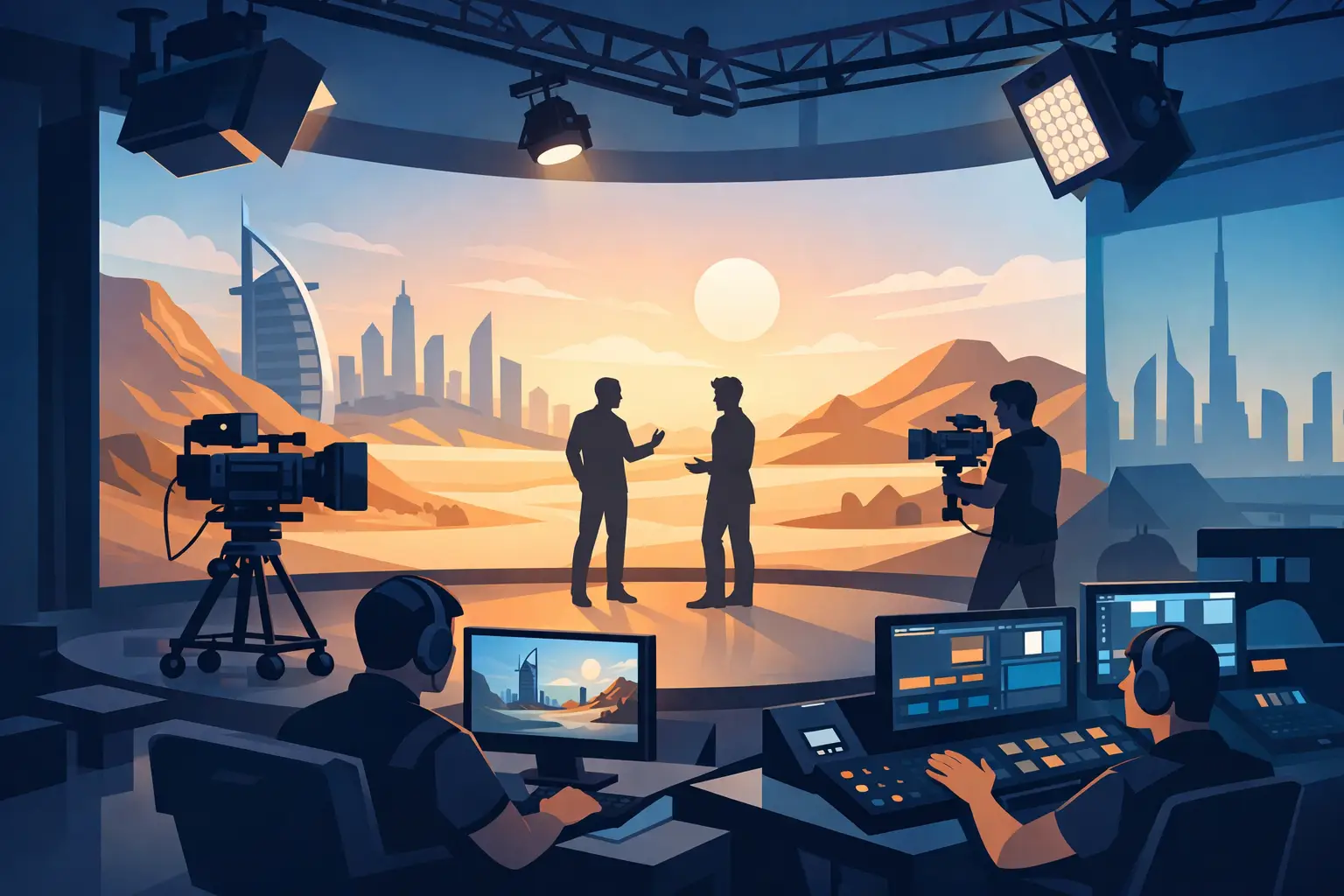
A virtual production stage rental is not just a larger screen behind your talent. It is a decision about speed, control, and how much of the final image you want solved before post-production begins. For a commercial shoot, a founder-led Reel series, a corporate presentation, or a music-driven visual, the right stage lets the team walk in with a plan and leave with footage that already looks intentional.
In Dubai, that matters. Locations can be expensive, permits can add time, and moving a full crew between sets can consume a production day before the first usable take. A production-ready LED stage gives you a controlled environment where backgrounds, lighting direction, camera angles, and content formats can be planned in one place.
What a Virtual Production Stage Rental Should Include
The term virtual production is used broadly, so check what is actually included before booking. Some spaces provide an LED wall only. Others offer a complete working set with display, floor treatment, lighting, sound, crew space, and practical support around the shoot.
For most branded content and commercial productions, the setup needs to do more than display a background. The LED screen should be large enough to hold the frame without forcing every shot into a tight crop. It needs reliable playback and enough brightness to work with the intended camera settings. A mirror floor can extend the visual environment into the foreground, creating reflections that make an LED scene feel more dimensional rather than flat.
Lighting is equally important. An LED wall can provide motivated color and ambient light, but it does not replace a deliberate key, fill, or edge-lighting plan. A usable rental stage has the room and infrastructure for the crew to shape the talent, product, or vehicle in front of the screen. Sound matters too, especially for presentations, interviews, podcasts, and direct-to-camera content where clean dialogue is part of the deliverable.
At PROS.CRTV, the Dubai studio provides more than 90 square meters of shooting space, a large-format LED screen, mirror floor, lighting, sound, and room for crews of up to 20 people. That scale gives a production team space to work without turning every setup change into a logistics problem.
Choose the Stage Based on the Job, Not the Trend
Virtual production can create impressive environments, but it is not automatically the best answer for every shoot. The strongest bookings start with a clear use case.
For a product campaign, an LED stage can create multiple visual worlds in one day: a clean architectural interior, a saturated graphic environment, an abstract motion background, or a destination-inspired scene. The value is not simply visual novelty. It is the ability to change the campaign look without relocating lights, talent, products, and crew.
For personal brands and social content teams, the goal is often volume. A founder may need a month of short-form videos without spending a month filming them. In that case, use the screen to create distinct content zones: a keynote-style presentation setup, a bold branded background, a lifestyle-style scene, and a clean direct-to-camera frame. The audience experiences variety, while the production remains in one controlled studio.
For corporate teams, the LED screen is especially useful when a presenter needs supporting visuals behind them. It can hold brand graphics, slides, dashboards, event visuals, or campaign messaging in-camera. This can look more polished than filming a speaker against a blank wall and adding everything later, but only if screen content is designed for camera. Small text, thin lines, and overly detailed slides rarely perform well on video.
Film crews and agencies may have a different priority: stage access and technical control. They may bring their own cinematographer, gaffer, camera package, art direction, and playback workflow. In that situation, the best rental is one that provides a prepared facility while allowing the crew to keep control of the production method.
Questions to Answer Before You Book
A clear brief protects both the creative idea and the schedule. Before confirming a virtual production stage rental, define the camera format, the final platforms, the number of setups, and who is responsible for screen content.
Start with framing. Vertical Reels, square social assets, widescreen ads, presentations, and interviews each use the stage differently. A background that looks strong in a wide horizontal frame may leave too little visual interest when cropped for vertical content. Planning the hero format first prevents the team from discovering this after the shoot.
Then consider movement. A static talking-head setup is relatively simple. A moving camera, reflective product, wide shot, or subject walking across the stage requires more attention to the relationship between the LED image, floor reflections, exposure, and perspective. If the camera move is central to the idea, test it before talent arrives.
Finally, decide whether you need a space or a complete content operation. Renting a stage is ideal when your team already has a crew and a production plan. A turnkey package is more efficient when you need scripting support, filming, editing, and platform-ready cutdowns from one booking. These are different purchases, and choosing the right one avoids paying for resources you will not use.
How to Make the LED Wall Look Good on Camera
The screen content should be treated as production design, not as an afterthought. High-resolution source files, intentional color choices, and backgrounds built for the selected lens and framing will produce a better result than a last-minute stock image stretched across the wall.
Avoid placing talent in front of backgrounds with busy detail directly behind the head and shoulders. Architectural lines, horizon lines, and high-contrast patterns can distract from a speaker or make the composition feel accidental. Give the subject visual separation, then use lighting to reinforce it.
Color also needs coordination. If the LED background is deep blue or red, it will influence skin tones, wardrobe, reflective surfaces, and the mirror floor. That can be a creative advantage, but it should be planned. Bring wardrobe options, and leave enough time to test the intended look with the actual camera.
For product work, reflective packaging, jewelry, glossy electronics, and glass may reveal the LED pixels or unwanted screen reflections. Sometimes this is manageable through angles and lighting. Other times, a controlled practical background or a later compositing workflow is the better choice. Virtual production is powerful because it puts more of the scene in-camera, not because it eliminates every production decision.
Build a Schedule That Produces Deliverables
A stage booking can feel generous at the start of the day and extremely short once styling, screen changes, lighting adjustments, and talent resets begin. The answer is not always booking more hours. It is designing fewer, stronger setups.
Group shots by lighting direction and screen environment. Capture all content for one visual world before moving to the next. For social campaigns, plan each setup to generate multiple edits: a main message, a hook-first version, a short answer, a behind-the-scenes clip, and supporting stills. One four-hour shoot can create a meaningful content library when the shot list is built around reusable formats rather than one-off ideas.
Allow time at the beginning for a camera and LED test. Check exposure, refresh behavior, white balance, moire, reflection, and playback. A ten-minute test can prevent an hour of unusable footage. At the end of the session, reserve time for pickup lines, alternate hooks, and clean plates if your editor may need them.
For clients who need fast publication, define editing expectations before filming. Same-day or next-day delivery works best when the formats, edit count, captions, aspect ratios, and approvals are agreed in advance. Fast turnaround is a workflow, not a promise made after the cameras are packed.
Budget for the Full Production Day
Stage rental pricing is only one part of the decision. At PROS.CRTV, hourly facility rental starts at 500 AED per hour, which is useful for crews that need a professional environment without committing to a full production package. But the total budget should also account for crew, camera, lighting additions, screen visuals, talent, styling, transport, and edit delivery when needed.
The trade-off is straightforward. A location-based shoot may look less expensive on paper, but it can require travel, permits, weather contingencies, separate sound control, and longer reset times. A studio stage concentrates those variables into a controlled booking. It is usually the better commercial choice when content volume, brand consistency, or turnaround speed matters more than a specific real-world location.
Bring a defined brief, screen-ready visuals, and a shot list built around the channels where the content will live. The stage will do its best work when every minute on it has a job: capture the hero shot, create the variations, and leave your team with footage ready to move.
Ready to shoot this?
Bring the brief to the stage — LED wall, mirror floor and a crew that turns ideas like this into finished content — same day on selected packages.
Book the studio