Choosing a Social Media Content Studio in Dubai
Plan a month of polished video in one session. A social media content studio Dubai teams can book should deliver equipped sets, fast edits, and control.
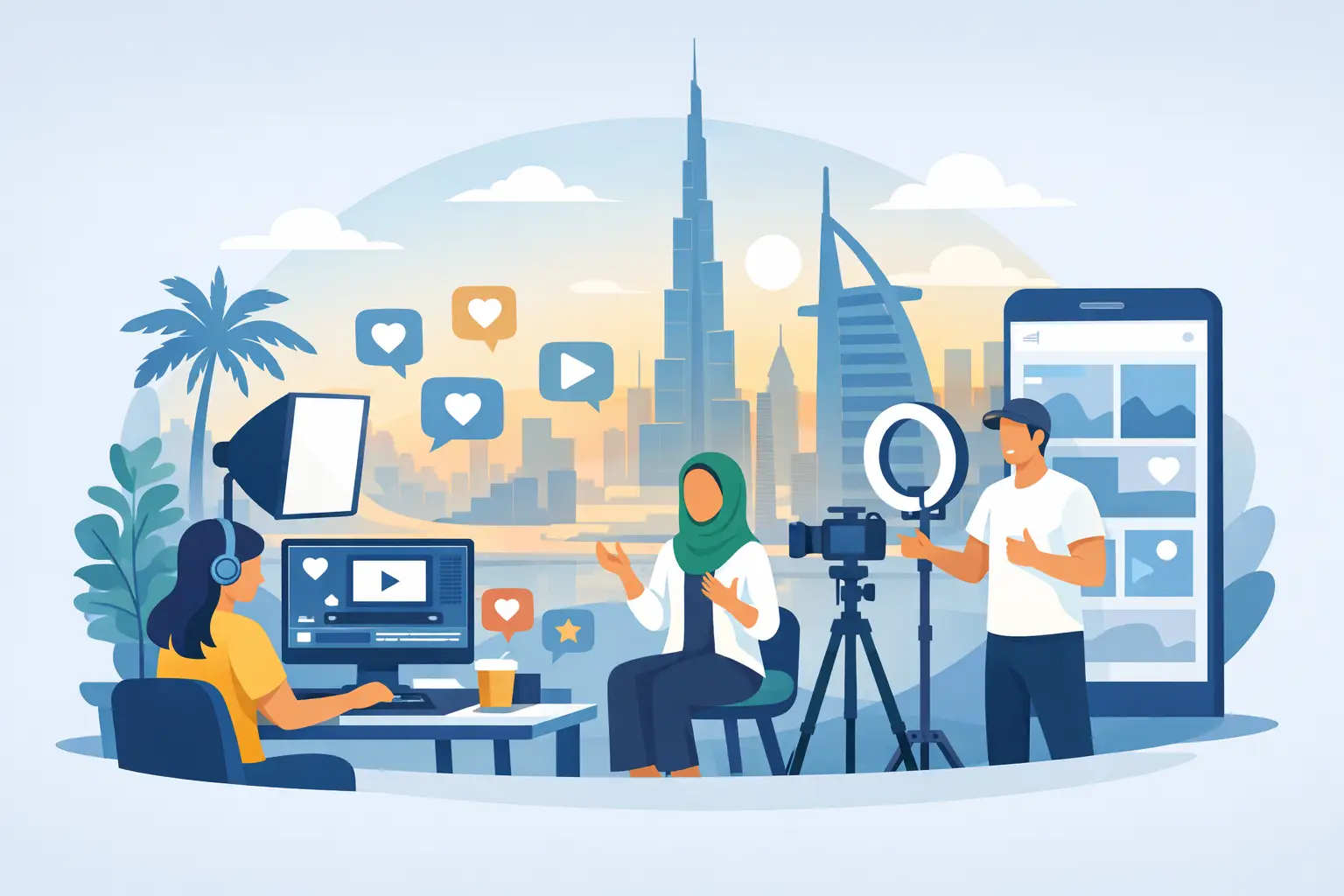
A founder has 90 minutes between meetings. A speaker needs presentation footage before a corporate event. An agency crew needs a controlled set without losing half the day to setup. Searches for “social media content studio Dubai” usually come from that exact pressure: content has to look premium, fit the platform, and be ready to publish fast.
The answer is not simply renting four walls and a camera. The right studio should reduce production friction from the moment your crew arrives. That means prepared lighting, sound, space to move, visual options that do not require a location change, and a defined path from filming to finished short-form edits.
What a Social Media Content Studio in Dubai Should Deliver
A social content shoot is judged by output, not by how complicated it looked behind the scenes. Before booking, start with the deliverables. If your goal is a month of Reels, ask how many vertical edits the session is designed to produce, what footage formats are included, who handles editing, and when final files will arrive.
For a business owner or personal brand, a four-hour filming block can create far more than one polished video. With a clear content plan, it can cover direct-to-camera clips, product demonstrations, founder commentary, FAQs, testimonials, promotional hooks, and still images for social posts. The production needs to be organized around multiple short formats from the beginning. Trying to cut social content from a single long-form recording later often creates weak openings, repetitive framing, and too little usable variety.
For crews and agencies, the calculation is different. You may already have the director, camera team, talent, and post-production workflow. In that case, studio rental should give you reliable infrastructure while leaving creative control with your team. The facility should be ready for professional production, not a decorative space that needs to be rebuilt before the first take.
Start With the Set, Not the Camera
A camera can travel. A controlled environment is harder to create quickly.
A production-ready Dubai studio with a large LED screen gives a social campaign more range without forcing the team to move between locations. One setup can become a branded presentation environment, a digital cityscape, a product-focused backdrop, or a clean graphic scene. An LED visual is not automatically better than a physical set, but it is a practical advantage when speed, content volume, or visual consistency matter.
The same is true of a mirror floor, professional lighting, and prepared sound. They are not add-ons to admire on a specification sheet. They affect what can realistically be captured in one session. A reflective floor can add scale to a fashion, automotive, or product shot. Controlled lighting keeps talking-head clips consistent across a full content batch. Reliable sound prevents a strong message from becoming unusable after the shoot.
At PROS.CRTV, the 90+ m² Dubai studio is built for that production reality, with an LED screen, mirror floor, lighting, sound, and room for crews of up to 20 people. That capacity matters when a shoot includes a client team, talent, agency staff, hair and makeup, and a production crew. A smaller set may cost less on paper but become expensive when people are waiting for space, resets, or access to equipment.
Choose Between Studio Rental and Turnkey Production
The best booking model depends on who owns the production process.
When hourly studio rental makes sense
Hourly rental is the practical choice for production companies, videographers, photographers, and agencies that arrive with a plan and a crew. You retain your workflow, bring the equipment you need, and use the space for the specific scenes on your call sheet. Starting from 500 AED per hour, this option works especially well for shoots that need a large-format LED environment without the cost and complexity of building one independently.
Before confirming a rental, establish the essentials: access times, crew size, LED screen requirements, load-in needs, sound expectations, and whether your visual assets are ready for the display. The studio can be technically impressive, but the day still needs a production schedule. Book enough time for setup, lighting tests, talent preparation, filming, and reset time.
When a turnkey package is the stronger decision
A turnkey package is for clients who need content, not another vendor to manage. This is often the better route for founders, personal brands, speakers, and marketing teams without an in-house production department.
The key benefit is accountability. One studio team coordinates shooting, recording, and editing around a defined output. Instead of booking a studio, hiring a camera operator, sourcing an editor, transferring footage, and chasing delivery dates, you work from one production plan. The target is straightforward: leave the shoot knowing what will be delivered and when it can go live.
Same-day delivery is useful for time-sensitive announcements, event content, and social campaigns that cannot wait through a long post-production queue. For broader short-form packages, receiving ready-to-publish Reels within 24 hours keeps momentum high. It also gives the marketing team time to review captions, schedule posts, and build supporting assets while the topic is still timely.
Plan One Shoot Around Content Volume
The most common mistake in social production is treating each Reel as a separate project. That approach consumes budget through repeated setup, repeated travel, and repeated approvals. A stronger model is to plan a single shoot around a content library.
Start with three content pillars. A founder may use expertise, company story, and offer. A real estate brand may use market guidance, listings, and client proof. A corporate speaker may use presentation clips, leadership insight, and event promotion. Each pillar should have several specific prompts, written to work as stand-alone vertical videos.
Then build variation into the shoot. Change the framing, background visual, wardrobe layer, or prop between content blocks. The audience does not need a completely new set for every video, but it does need enough visual distinction that a month of posts does not feel like the same clip repeated. An LED screen makes these changes faster, particularly when the content requires several branded or topic-specific looks.
Keep scripts concise. Short-form video performs best when the point arrives early. Open with a question, a clear claim, a mistake your audience recognizes, or a result they want. Then give one useful answer. A 30-second Reel rarely needs every detail. It needs a reason to stop scrolling and a message that is easy to remember.
Ask These Production Questions Before You Book
A polished website or attractive studio image should not be the final decision point. Ask operational questions that protect the outcome.
First, ask what is included in the booking. Lighting, sound, LED use, crew support, editing, and delivery are often priced differently across studios. Clear inclusions prevent the budget from expanding after the shoot is already scheduled.
Second, ask what the turnaround promise means in practice. Does it mean raw footage is sent quickly, or are the edits fully captioned, formatted, and ready to publish? For social content, that distinction is significant. A file that still needs editing is not a finished marketing asset.
Third, ask how the studio handles your creative inputs. If you have brand colors, presentation slides, campaign references, logos, or scripts, identify the deadline for supplying them. LED visuals and branded graphics work best when prepared before shoot day, not improvised while the crew is on the clock.
Finally, assess whether the studio understands your format. A cinematic brand film, an executive presentation, a product shoot, and 25+ short-form videos have different pacing, crew needs, and post-production requirements. The studio partner should be able to translate the business objective into a realistic shoot structure.
Make the Shoot Day Work Harder
Arrive with decisions already made: the content topics, the approved talking points, talent wardrobe options, required props, and the people who can approve creative choices on set. This does not make the shoot less creative. It protects time for the decisions that actually improve the footage.
For presenters, record the core presentation first while energy is high and the message is freshest. Then capture shorter responses, promotional clips, and alternate hooks. For product-based brands, film the hero shots before moving into supporting social angles. For founders, use the first section of the session for scripted messages and leave room later for conversational insights that often become the strongest Reels.
A good studio day should feel focused, not rushed. The goal is not to fill every minute with filming. It is to leave with enough high-quality material that publishing becomes easy for weeks afterward.
Book the space and production format that match your actual bottleneck. If you need a technically ready stage for your own crew, choose the facility. If you need a month of content without managing multiple suppliers, choose a package with defined edits and fast delivery. The best shoot is the one that turns a few hours on set into content your audience can see tomorrow.
Ready to shoot this?
Bring the brief to the stage — LED wall, mirror floor and a crew that turns ideas like this into finished content — same day on selected packages.
Book the studio